
Table of Contents
- Why Habitat Setup Determines Your Rabbit's Health
- Rabbit Housing Space Requirements: Minimums That Actually Work
- How to Rabbit Proof a Room in 30 Minutes
- Essential Rabbit Supplies for Beginners: The Complete Checklist
- Setting Up the Habitat Step by Step
- Multi-Rabbit Social Dynamics: Housing Pairs and Groups
- Cleaning and Maintenance Schedules That Keep Odors Away
- Senior Rabbits and Accessibility: Adjusting the Habitat
- Frequently Asked Questions
Last Updated: September 7, 2026
Why Habitat Setup Determines Your Rabbit's Health
The best habitat setup for pet rabbits is more than a cage and a water bottle; it is the foundation of their physical and behavioral health. A proper enclosure directly influences digestion, dental wear, and cardiovascular health, while a cramped or unsafe space often leads to obesity, gut stasis, and destructive chewing.
Most guides focus on the cute factor of a hutch, but the reality is that rabbits need room to run, jump, and stand upright. A habitat that fails to provide this will shorten a rabbit's lifespan and diminish its quality of life. Below, we'll show you exactly how to build a setup that meets welfare standards and keeps your rabbit engaged, covering space minimums, bunny-proofing, and daily maintenance.
The good news is that creating an ideal habitat doesn't require a massive budget or a dedicated room. It requires understanding a few non-negotiable principles about rabbit behavior and safety, then applying them consistently to your living space.
Rabbit Housing Space Requirements: Minimums That Actually Work
A common mistake is treating the cage as the primary living space. The minimum space requirement for a single rabbit is an enclosure that allows three consecutive hops, which translates to roughly 8 square feet of floor space for the main pen, plus a separate exercise area of at least 24 square feet (rabbitwelfare.co.uk). These are the absolute floor minimums recommended by most veterinary behaviorists, not the ideal target.
Rabbits are crepuscular and highly active at dawn and dusk. Without adequate square footage, they cannot exhibit natural locomotion, leading to muscle weakness and joint issues. If you are using a commercial cage, measure the interior floor space, not the overall footprint, to ensure it meets these standards.
Indoor vs. Outdoor Housing: Why Indoor Wins
Indoor housing is the safer choice for the vast majority of pet rabbits. Rabbits kept indoors are protected from predators, extreme temperature fluctuations, and flystrike, a fatal condition caused by flies laying eggs on soiled fur. Outdoor hutches, even predator-proof ones, expose rabbits to temperature regulation challenges that can be fatal during heat waves or freezing nights.
Indoor rabbits also receive more socialization, which reduces territorial behavior and builds a stronger bond with their humans. If you have the space, dedicate a corner of a living room or a spare bedroom to the habitat. This keeps your rabbit integrated into family life while providing the security of a defined territory.
Cage, Pen, or Free-Roam: Choosing the Right Base
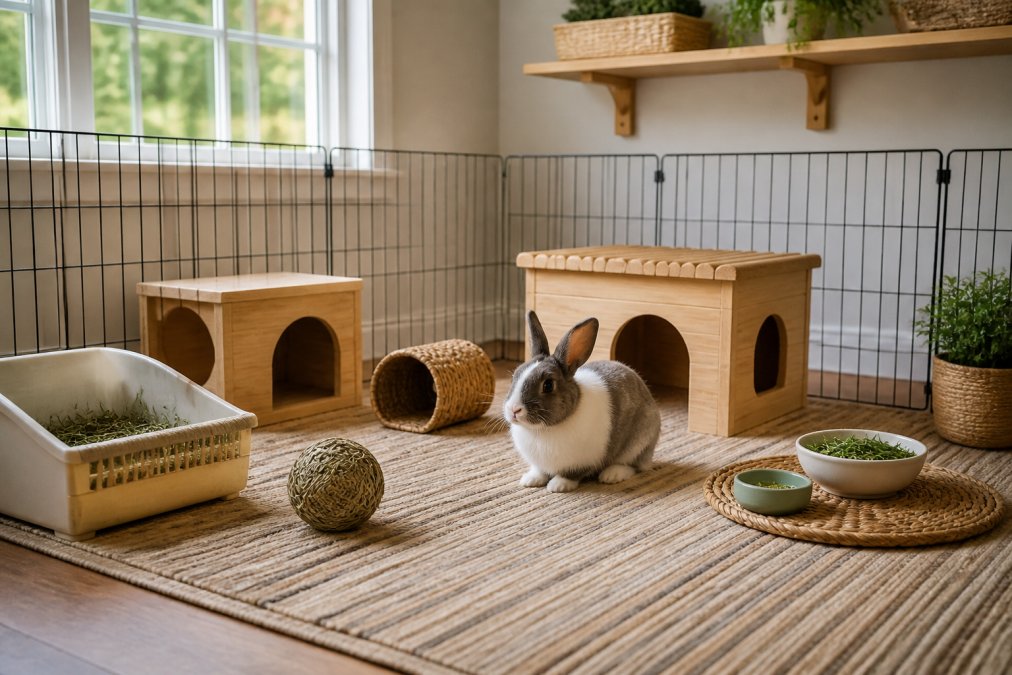
The best habitat setup for pet rabbits usually involves an exercise pen rather than a traditional wire cage. An exercise pen offers more floor space and vertical clearance, and it allows you to customize the layout with litter boxes and hideouts. Wire-bottom cages are a leading cause of sore hocks, so a solid floor with soft substrate is essential (peer-reviewed research).
Free-roaming is the gold standard, but it requires rigorous bunny-proofing across the entire room. A hybrid approach works best for most owners: a large exercise pen for unsupervised time and full room access while you are home to supervise. This gives the rabbit freedom without the risk of chewing hazards when you cannot watch.

How to Rabbit Proof a Room in 30 Minutes
Rabbit-proofing is the process of making a room safe for a free-roam or pen-confined rabbit during supervised out-of-pen time. You will need cable protectors, furniture guards, and a keen eye for anything at chew level. The goal is to eliminate access to hazards before your rabbit discovers them, not after.
Start by getting down to your rabbit's eye level. Rabbits chew anything within reach, and they can reach higher than you think when they stand on their hind legs. Move electrical cords behind furniture or encase them in spiral cable wrap, which is a cheap and effective deterrent.
Cables, Baseboards, and Other Chew Targets
Baseboards are a primary target for rabbits, especially during the teething phase. Cover exposed corners with clear plastic corner guards or thin strips of wood that the rabbit is allowed to chew instead. This redirection strategy preserves your trim while satisfying the rabbit's urge to gnaw.
Electrical cables are the most dangerous hazard in any room. Use split loom tubing or flexible cable conduits to cover all cords, including phone chargers and ethernet cables. A rabbit that chews a live wire risks electrocution, which is why bunny-proofing is non-negotiable for safety.
Creating Safe Hiding Spots and Vertical Space
Rabbits are prey animals, so a habitat without hiding spots creates chronic stress. Provide at least two hideouts per rabbit, such as cardboard castles, wooden houses, or fabric tunnels. These should be placed in quiet corners away from high-traffic areas to give your rabbit a sense of security.
Vertical space is equally important for enrichment. Rabbits enjoy climbing onto sturdy platforms and ramps, which mimics their natural instinct to survey for predators. Ensure any platform is at a safe height and has a non-slip surface, as rabbits have delicate spines that are prone to injury from awkward landings.
Essential Rabbit Supplies for Beginners: The Complete Checklist
Before you bring a rabbit home, you need the right supplies to support their health. The essential rabbit supplies for beginners include a water bowl or bottle, a heavy ceramic food dish, a litter box, paper-based litter, hay, pellets, chew toys, and a hideout. Avoid wire flooring and pine or cedar shavings, which emit phenols that are toxic to rabbit livers (PubMed).
A high-quality hay feeder is critical for dental health. Rabbits have continuously growing teeth, and they need constant access to grass hay like timothy or orchard grass to wear them down. Without it, they develop malocclusion, which requires painful veterinary filing.
Flooring, Litter Boxes, and Bedding That Prevent Health Issues
Flooring is the single most important health factor in a rabbit habitat. Solid flooring covered with a soft mat or fleece liner prevents sore hocks, a painful ulceration on the feet caused by wire or rough surfaces. Use washable cage liners or yoga mats for easy cleaning and comfort.

Litter box training is straightforward if you set up the habitat correctly. Place a litter box in the corner where the rabbit naturally eliminates, and fill it with paper-based litter topped with a layer of hay. Rabbits like to eat while they eliminate, so the hay will encourage them to use the box consistently.
Enrichment and Chew Toys for Mental and Dental Health
Boredom is a leading cause of destructive behavior in rabbits. Provide a rotating selection of chew toys made from untreated wood, willow, and loofah. These satisfy the chewing instinct and prevent boredom-induced behaviors like cage bar biting or excessive digging.
We recommend natural loofah toys like the Loofa Boat or Loofa Hearts to encourage constructive entertainment and maintain healthy teeth. These toys help reduce anxiety and are safe for rabbits to gnaw on, supporting overall pet health between meals.
Setting Up the Habitat Step by Step
Setting up the habitat correctly takes about an hour the first time. Follow these steps to create a safe, functional living space for your rabbit:
- Choose the location: Select a quiet, draft-free area away from direct sunlight and loud appliances. The room should maintain a stable temperature between 60-70°F.
- Assemble the base: Set up the exercise pen or cage on a solid, level floor. Ensure the enclosure is tall enough that the rabbit cannot jump out, typically at least 30 inches high.
- Install the flooring: Lay down a washable liner or fleece mat over the entire floor of the pen. This protects the underlying surface and provides traction for your rabbit.
- Place the litter box: Put the litter box in the corner your rabbit has chosen as a bathroom. Add a layer of paper litter and a generous handful of hay on top.
- Add the hideouts: Position at least one hideout in a quiet corner of the pen. Add a second hideout on the opposite side to give your rabbit options.
- Set up food and water: Place the heavy ceramic bowl for pellets and a water bowl or bottle on the opposite side of the pen from the litter box to encourage movement.
- Scatter enrichment: Distribute chew toys, tunnels, and digging boxes throughout the pen. Rotate these toys every few days to maintain novelty.
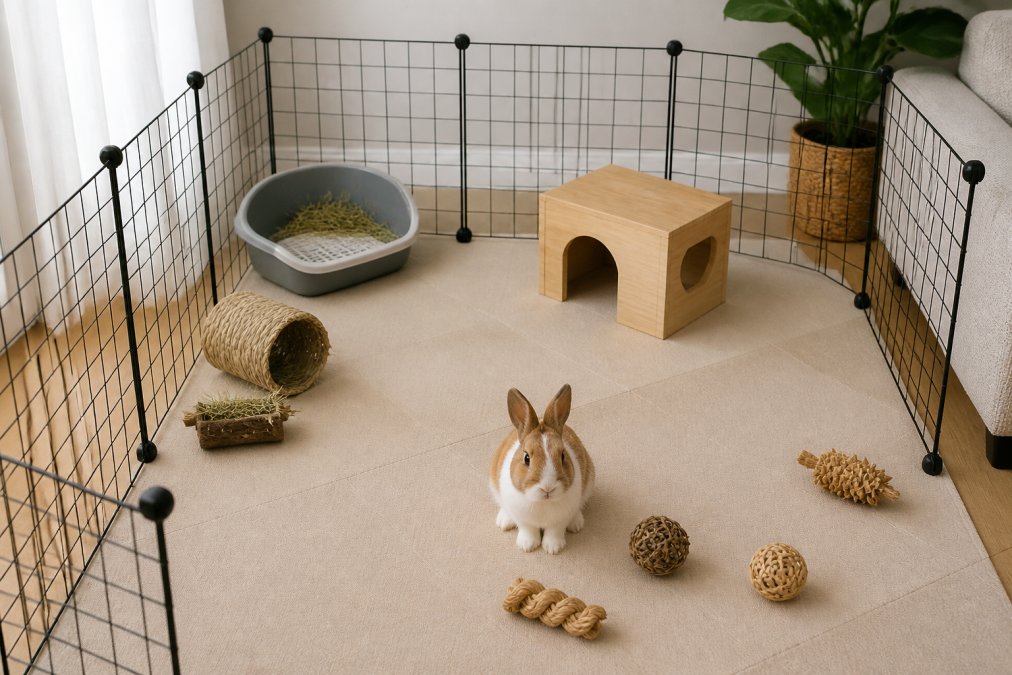
A common setup mistake is placing the food and water right next to the litter box. Rabbits prefer to keep eating areas separate from elimination areas, and separating them encourages the rabbit to move around the enclosure, which supports cardiovascular health and prevents obesity.
Multi-Rabbit Social Dynamics: Housing Pairs and Groups
Rabbits are highly social animals, and the best habitat setup for pet rabbits often involves housing them in pairs or small groups. A bonded pair is significantly happier and healthier than a single rabbit, as they groom each other, play together, and provide warmth and security. However, introducing a second rabbit requires careful planning and a neutral territory.
When housing multiple rabbits, you must scale up the enclosure size. A pair needs at least double the floor space of a single rabbit, and you must provide multiple food bowls, water sources, and hideouts to prevent resource guarding. The general rule is one more hideout and one more litter box than the number of rabbits.
Bonding rabbits requires patience and a neutral space. Never introduce a new rabbit directly into an established rabbit's territory, as this triggers intense territorial behavior and fights. Use a large, neutral exercise pen and supervise interactions until they establish a stable hierarchy, which can take several weeks.
Cleaning and Maintenance Schedules That Keep Odors Away
A clean habitat is essential for preventing respiratory infections and keeping your home smelling fresh. Spot-clean the litter box daily by removing soiled hay and waste, and perform a full substrate change every 3-4 days. A consistent routine prevents ammonia buildup, which is harmful to rabbit lungs.
Weekly maintenance should include wiping down all hard surfaces with a pet-safe cleaner and washing food bowls. Monthly, you should deep-clean the entire enclosure, including the exercise pen bars and any fabric items. To keep odors neutralized between cleanings, use an all-natural enzyme spray like No-Mo Odor, which breaks down waste at the source rather than masking the smell.

Senior Rabbits and Accessibility: Adjusting the Habitat
As rabbits age, their mobility and health needs change, and the habitat must adapt to maintain their quality of life. Senior rabbits often develop arthritis, so you must reduce the height of platforms and provide ramps with a gentle incline instead of jumps. A soft, thick bedding layer is essential to cushion achy joints.
Accessibility also means lowering the height of food and water bowls. Senior rabbits may struggle to reach raised feeders, so place everything at floor level or on a very low, stable platform. Keep the habitat on a single level to prevent falls, and ensure the flooring provides excellent traction to support weak hind legs.
The best habitat setup for pet rabbits is not a static purchase; it is a dynamic system that evolves with your rabbit's life stage. Whether you are setting up a first home for a young rabbit or adapting a space for a senior companion, the principles of space, safety, and enrichment remain constant.
Creating the best habitat setup for pet rabbits is the most impactful step you can take toward ensuring a long, healthy life for your companion. At Critter Love® LLC, we support your efforts with thoughtfully designed habitats and accessories, from Pet Cages with solid plastic bases to Cage Liner Mats that simplify cleaning. Our expert-formulated Rabbit Kibble complements a high-fiber hay diet to support digestive and dental health. Get started with Critter Love and build a habitat your rabbit will thrive in for years to come.
Frequently Asked Questions
What is the minimum space requirement for a pet rabbit?
A single rabbit needs at least 8 square feet of living space, but that is the absolute floor. For a habitat setup that supports health, aim for 12 square feet or more. The enclosure should be at least 24 inches tall so your rabbit can stand on its hind legs. Remember, this space is separate from daily exercise time. Rabbits also need 3 to 4 hours outside the enclosure each day to run, jump, and explore safely.
Do rabbits prefer a hutch or a cage?
Neither is ideal on its own. Traditional hutches and small cages do not provide enough room for running or jumping, which keeps rabbits from getting proper cardiovascular health. A better habitat setup uses an exercise pen or a large enclosure with a solid floor, plus a hideout for security. If you use a cage, make sure it is a base for sleeping only and that your rabbit gets several hours of supervised free-roam time daily.
How do I rabbit proof a room for free-roaming?
Start at floor level since that is where rabbits explore. Cover or hide electrical cables with spiral tubing or flex tubing. Block access behind furniture and under beds using cardboard, plywood, or baby gates. Move houseplants out of reach, since many common varieties are toxic. Protect baseboards with clear plastic corner guards or wooden planks. Check the room again after a week, because rabbits find new trouble spots once they settle in.
How often should a rabbit's habitat be cleaned?
Spot-clean the litter box daily and replace soiled bedding right away. Do a full habitat cleaning once a week: wash the litter box with warm water and a pet-safe cleaner, replace all substrate, and wipe down walls and floors. Wash fabric items like fleece liners every 3 to 4 days. A consistent schedule prevents ammonia buildup, which can cause respiratory issues, and keeps your rabbit's space fresh without harsh chemical smells.
Can rabbits live in a cage, or do they need a pen?
Rabbits need more than a cage provides. A cage alone limits movement, which weakens bones and leads to obesity. An exercise pen with at least 8 square feet gives your rabbit room to hop, stretch, and exhibit natural behaviors. Many owners connect a cage to a pen so the cage becomes a sleeping area and the pen offers daytime space. This setup balances security with the freedom rabbits need to stay physically and mentally healthy.
What are the essential rabbit supplies for beginners?
Start with a spacious enclosure, a heavy ceramic bowl for water, a hay feeder, and a litter box with paper-based litter. Add soft flooring like fleece mats, a hideout for security, and chew toys such as loofa toys or untreated wood blocks. Stock up on timothy hay, fresh greens, and a quality pellet like Critter Love Rabbit Kibble. A cordless vacuum and pet-safe enzyme cleaner make daily maintenance much easier.


