
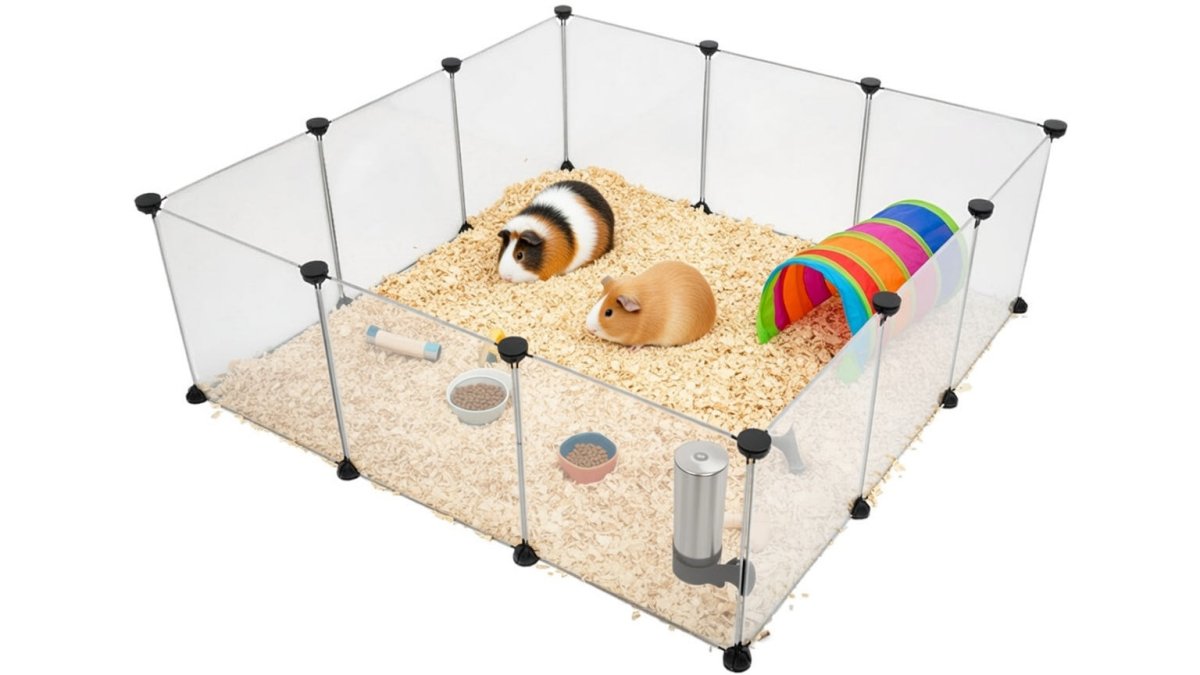
Quick Summary
To bond two male guinea pigs, start with side-by-side cages so they can see and smell each other, then move to short supervised sessions on a clean, neutral floor. Lengthen the sessions only when both pigs stay calm, and move to a shared cage last.
- Choose a neutral space that neither guinea pig claims, and clean it with a pet-safe cleaner.
- Swap bedding between the cages for a few days so each pig gets used to the other's scent.
- Keep first face-to-face sessions to five to ten minutes and never leave the pair unattended.
- Separate the pigs immediately if a bite draws blood, one pig is pinned, or fur is pulled out.
- Offer duplicate bowls, water bottles and hideys so neither pig controls all the resources.
Table of Contents
- Why Bonding Two Male Guinea Pigs Takes Extra Care
- Preparing a Neutral Territory for the First Meeting
- Step-by-Step Introduction Process
- Normal Dominance Behavior Versus Real Aggression
- How Long Does Guinea Pig Bonding Take?
- When Bonding Stalls or Fails
- Setting Up Your Pair's Shared Home for Success
- Frequently Asked Questions
Why Bonding Two Male Guinea Pigs Takes Extra Care
Bonding two male guinea pigs is possible, but it takes patience and a clear plan. Male guinea pigs, also called boars, are more likely to compete for dominance than females, so the first meeting when you bond two male guinea pigs needs care. A slow, supervised introduction gives both animals time to learn that the other is not a threat.
Research supports the idea that pairing adult males can work well when it is done carefully.
Keep in mind that not every pair will bond. Some pairs take weeks, and a few never get along. Going slowly protects both animals from injury.
Quick tip: Bond males when they are young, if you can. Adult males who have lived alone for a long time may take longer to accept a companion.
Preparing a Neutral Territory for the First Meeting
Choose a neutral space that neither guinea pig claims as its own. A clean floor area or a spare room works well.
Clear the area of any scent markers. Wipe the floor with a pet-safe cleaner and let it dry fully.
Keep the space warm and quiet. Stress makes aggression more likely, so avoid loud noise, bright lights, and other pets nearby.
Step-by-Step Introduction Process
Bonding usually happens in stages. Move to the next stage only when both animals stay calm at the current one.
| Stage | What Happens | Typical Length |
|---|---|---|
| Side-by-side cages | Pigs see and smell each other through a barrier | About 1 to 2 weeks |
| Supervised neutral floor time | Short, watched sessions in a clean open space | Several short sessions per day |
| Shared cage | Pigs live together with close monitoring | Ongoing, once calm |
Watch out: Never leave two males alone during early meetings. A fight can cause serious bites in minutes.
Side-by-Side Cages Before Any Contact
Place the two cages next to each other so the animals can see, hear, and smell one another. Put the cages on different sides of the room if you can, so neither pig feels pushed into the other's space.
Swap their bedding for a few days so each pig gets used to the other's scent. Watch for normal sniffing and popcorning. Calm behavior at this stage means you can move forward.
Supervised Face-to-Face Sessions
Start with short sessions of five to ten minutes on neutral ground. Stay in the room and watch closely. Use a towel or your hands to separate them if a fight starts, and always handle them gently.
Gradually lengthen the sessions over several days as the pigs stay calm. Expect some chasing and rumbling. Those are normal signs of dominance, and they usually settle down.
Normal Dominance Behavior Versus Real Aggression
Male guinea pigs sort out rank through a predictable set of displays. Knowing which behaviors are ritual and which are dangerous is the single most useful skill you can build before introductions. The line between dominance and fighting is crossed when behavior becomes one-sided, repetitive, and injurious rather than mutual and brief.
Normal dominance behaviors to expect
- Rumbling: a low, vibrating purr, often with stiff legs and a raised head. It looks dramatic but is a display, not an attack.
- Mounting: one boar mounts the other, sometimes from the front or side. Brief mounting is normal; constant mounting that prevents the other pig from eating or resting is not.
- Nose-to-nose sniffing and chin raising: a mutual assessment. Both pigs usually participate.
- Chasing in short bursts, with the chased pig able to stop, turn, and re-engage.
Signs of real aggression and when to intervene
Watch for these observable thresholds. Any one of them is grounds to separate immediately:
- A bite that breaks skin or draws blood.
- A pig rolled onto its back and held there, unable to right itself.
- Fur pulled out in clumps, leaving bare patches.
- One pig cornered with no escape route and the other continuing to press in.
A useful rule of thumb: if you are unsure whether to intervene, watch for 10 to 15 seconds. If the behavior escalates or the submissive pig cannot retreat, separate. Do not wait for blood to decide.
How to interrupt a fight safely
Never reach bare-handed into a rolling fight; bites meant for the other pig land on fingers. Instead:
- Drop a thick towel or a stiff piece of cardboard between the two pigs to break line of sight.
- Use a dustpan, a large bowl, or a folded towel to scoop one pig up and move it to a separate carrier.
- Place each pig in its own cage or carrier and let both calm down for at least an hour.
- Check both animals for puncture wounds, especially around the face, ears, and rump. A small bite can abscess later, so have a veterinarian look at any broken skin.
Watch out: separating pigs and then immediately reintroducing them in the same spot often restarts the fight. Give a full cool-down period and reset the neutral space before any retry.
The separation decision tree
- Brief rumbling, mounting, or chasing with both pigs able to eat and rest: leave them together and monitor.
- Repeated mounting or chasing that keeps one pig from resources: extend supervision, add duplicate bowls and hideys, and reassess within the session.
- Any bite that draws blood, a pinned pig, or a cornered pig that cannot escape: separate permanently for that session and do not retry the same day.
- A second fight after a calm retry: treat the pair as incompatible for now and move to separate housing with bar-to-bar contact.
Read more about caring for your guinea pig's coat, since grooming and skin condition can affect how comfortable and social your animals are.
How Long Does Guinea Pig Bonding Take?
Most pairs need anywhere from a few days to several weeks. Some bond quickly, while others take a month or more. The exact time depends on age, personality, and how consistent you are with the process.
A practical rule is to move to the next stage only after several calm sessions in a row. Rushing the process is the most common reason introductions fail.
When Bonding Stalls or Fails
Stalling is common and does not mean the pairing is doomed. The key is to diagnose why progress stopped before you decide whether to retry, change companions, or settle into separate housing. Stalls tend to fall into a few recognizable patterns, each with its own fix.
Troubleshoot the stall first
- If sessions end in chasing every time, the neutral space may carry scent. Clean it again, use a different room, and remove any hidey that one pig has claimed.
- If one pig guards the food or water, add a second bowl and bottle at the opposite end before the next session.
- If sessions go well but the shared cage fails, the cage is likely too small or still smells of one pig. Deep-clean it, rearrange the layout, and add a visual break such as a grid panel.
- If one pig is ill or in pain, bonding will not progress. A vet check for both animals is the right next step before any retry.
Use a structured cool-off period
When a session ends badly, separate the pigs into their own cages and keep them out of sight and smell of each other for at least 24 to 48 hours. During the cool-off, swap bedding so each pig keeps the other's scent without contact. After the cool-off, restart at the side-by-side cage stage rather than jumping back to floor time.
Decide whether to retry, re-pair, or house separately
- Retry if the stall was environmental: a dirty space, a single resource, or a cage that was too small. Fix the cause, then run two or three short supervised sessions before judging the result.
- Re-pair if repeated retries produce blood, pinned pigs, or a pig that stops eating. Some boars simply will not accept each other, and forcing it risks injury.
- House separately with bar-to-bar contact if both pigs seem calmer apart. Many boars live happily in adjacent cages and still interact through the bars. This is a legitimate outcome, not a failure.
Watch out: a pig that is losing weight, hiding constantly, or has a change in droppings after a failed session should see a veterinarian before any further introductions, because illness and pain can look like aggression.
Prevent relapse after a successful bond
A pairing that works on day one can still fall apart in the first weeks. Track these signals during the first month:
- Weight: weigh both pigs weekly. A drop in the submissive pig is an early warning.
- Resources: confirm two bowls, two bottles, and at least two hideys remain in place and are not being guarded.
- Space: if chasing reappears, add floor space or a visual barrier before assuming the bond has failed.
- Routine: keep feeding and cleaning times consistent, since sudden changes can trigger renewed competition.
If a previously stable pair starts fighting, treat it as a new introduction: separate, cool off, and restart at side-by-side cages. Keeping both animals healthy comes first, and a pig that is calm alone is better off than one stressed by a bad pairing.
Setting Up Your Pair's Shared Home for Success
Once your pigs live together, the shared home needs to give both of them space and resources.
Offer duplicate resources so no single pig controls everything. Fresh grass each day is a healthy part of the diet, as explained in Why Guinea Pigs Need Fresh Grass Daily.
A roomy enclosure gives both pigs space to move around. The Guinea Pig Colony Habitat is designed for 2-3 guinea pigs and features 10.89 square feet of living space. For extra hiding space, The Cozy Hide and Sleep Tunnel provides two semi-enclosed sleeping pods connected by a soft tunnel.
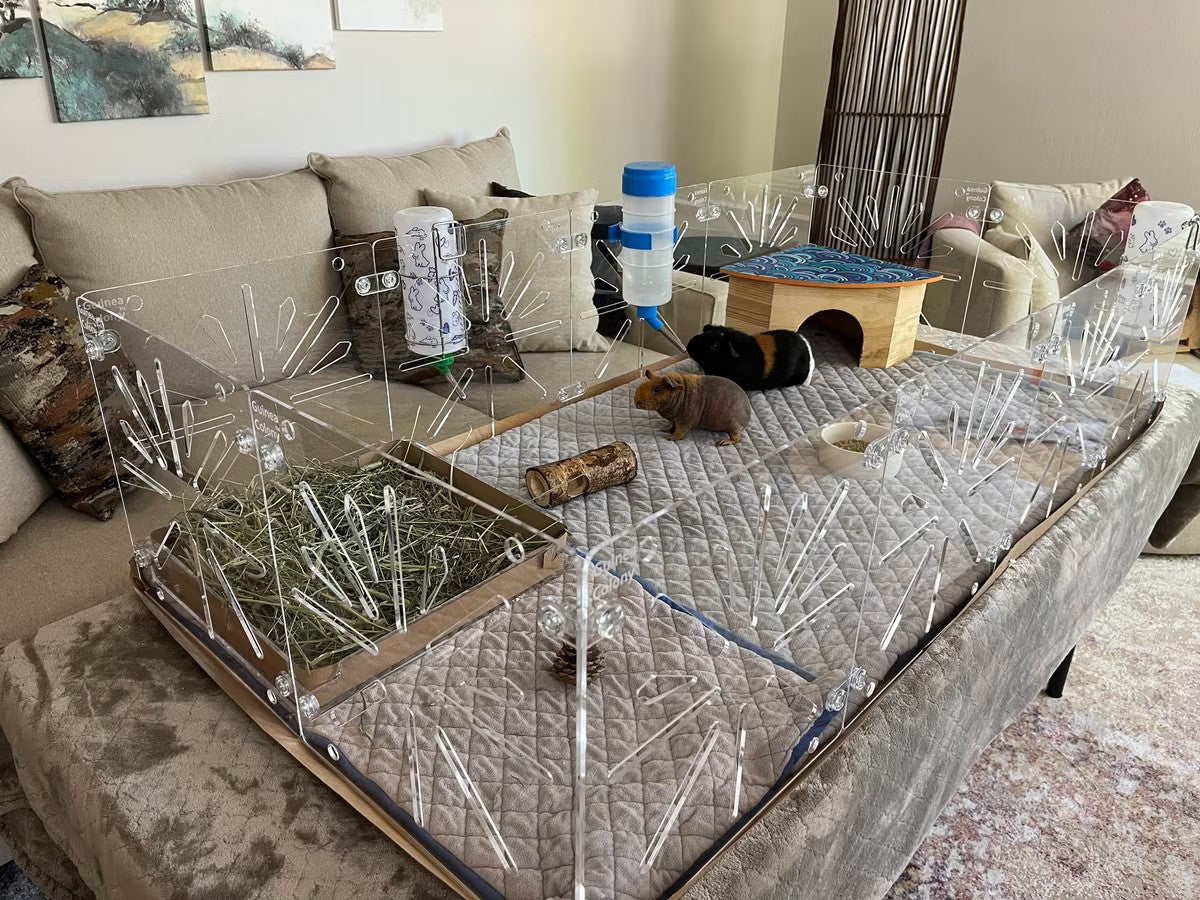
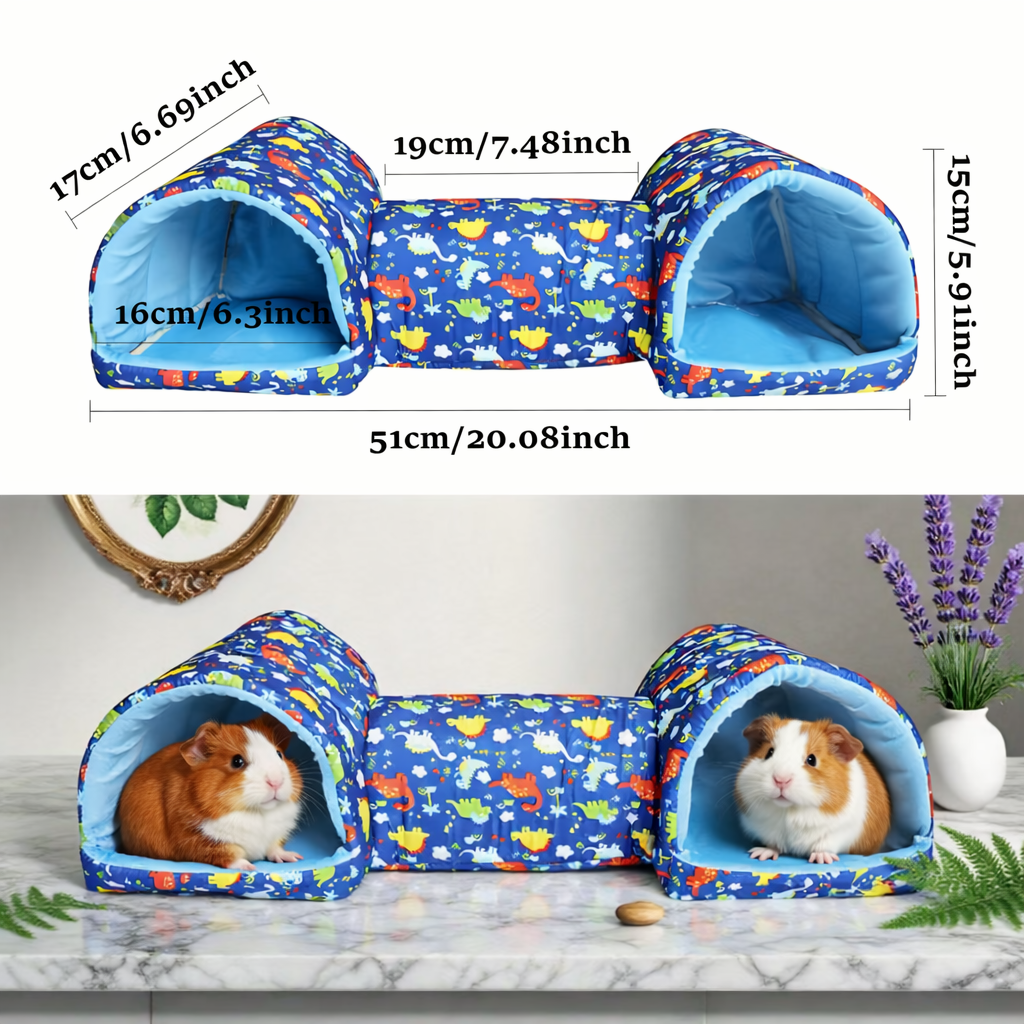
Clean the cage thoroughly before you move the pigs in together, and keep an eye on both animals during the first few weeks.
Critter Love® LLC has supported small pet owners with expert-formulated care and quality habitats, and we are glad to help your pair settle in.
Frequently Asked Questions
How do I get two male guinea pigs to bond?
Start with side-by-side cages so the pair can see and smell each other without contact. Then move them into a neutral space, such as a clean floor area, for short supervised sessions. Keep early meetings brief, watch for normal dominance behaviors like rumbling and mounting, and separate them if fighting becomes serious. Add duplicate food bowls, water bottles and hideys in the shared enclosure so neither pig has to compete for resources. Patience matters most: move at the pace the pigs set rather than a fixed calendar.
How long does it take for two male guinea pigs to bond?
There is no fixed timeline. Some pairs settle within a few days of supervised meetings, while others need several weeks of gradual introductions. A pair that is still fighting after repeated careful attempts may need a different approach or a separate living arrangement. Track progress day by day and avoid rushing from one step to the next.
What are the warning signs that a guinea pig bonding session is going badly?
Watch for persistent chasing, biting that draws blood, fur being pulled out in clumps, or one pig being pinned and unable to escape. Constant teeth chattering or a pig hiding and refusing to eat or drink are also signs of stress. Brief rumbling, sniffing and occasional mounting are usually normal. If injuries occur or the fighting does not stop within a few seconds, separate the pigs immediately and check them for wounds.
What should you do if two male guinea pigs fight?
Separate them right away by placing a barrier or lifting one pig into a carrier, and avoid reaching into the middle of a fight with bare hands. Check both pigs for bite wounds or bleeding. If there are injuries, contact a veterinarian who treats small animals. Once everyone is calm, return to side-by-side housing and restart the introduction process at an earlier stage. Repeated serious fights mean the pairing may not work.


