
Last Updated: October 25, 2026
Quick Summary
A responsible guinea pig breeder prioritizes animal health and wellbeing, maintains transparent breeding practices with detailed health and pedigree records, and stays available to answer questions long after you bring your guinea pig home. Finding a guinea pig breeder who meets these standards requires asking about housing, health documentation, breeding ethics, socialization, and post-purchase support.
- Ask breeders about housing conditions, bedding type, daily hay, and enrichment for breeding animals.
- Request vaccination records, vet-check documentation, and pedigree tracking from responsible breeders.
- Inquire how often females are bred per year and what happens to retired breeding animals.
- Watch for red flags: breeders who discourage questions, refuse references, or claim their guinea pigs are perfect.
- Verify the breeder offers post-purchase support and guidance on diet, behavior, and health concerns.
Table of Contents
- What Makes a Responsible Guinea Pig Breeder
- Guinea Pig Breeder Questions to Ask Before Buying
- Guinea Pig Health Check: What to Evaluate
- Guinea Pig Adoption vs. Buying From a Breeder
- Understanding Hairless Guinea Pigs and Other Specialty Breeds
- Setting Up Your Guinea Pig's Home
- Frequently Asked Questions
What Makes a Responsible Guinea Pig Breeder
A responsible guinea pig breeder prioritizes the health, genetics, and wellbeing of their animals above profit margins.
The best guinea pig breeders operate from a place of passion for the species. You can view guinea pigs for sale from responsible breeding programs that demonstrate these standards.
A responsible guinea pig breeder is willing to answer follow-up questions months or years after you've brought your guinea pig home.
Watch out: breeders who discourage questions, won't provide references, or claim their guinea pigs are "perfect" with no health concerns are red flags. Ethical breeders know that every animal has potential vulnerabilities and are honest about them.
Guinea Pig Breeder Questions to Ask Before Buying
Most breeder listings and forum threads tell you to "ask questions" without telling you what a good answer sounds like. Use this practical vetting checklist to compare breeders side by side. A responsible breeder should welcome every item below; hesitation or vague answers are your signal to keep looking.
The Breeder-Vetting Checklist
Housing and daily care
- Ask how the breeding guinea pigs are housed: individual or compatible groups, enclosure size, bedding type, and daily hay and enrichment. A good answer is specific and describes spacious, well-ventilated setups with dust-free bedding and unlimited hay.
- Ask to see the animals in their normal environment, not a staged area. Calm, curious guinea pigs that approach you are a better sign than animals that freeze or hide.
Health records and vet checks
- Ask directly: "Have you seen recurring respiratory, dental, or reproductive issues in your lines, and how are you addressing them?" Honest breeders acknowledge challenges and explain their selective-breeding or veterinary approach.
Breeding ethics and frequency
- Ask how often females are bred per year and at what age they retire. Over-breeding causes serious health complications; responsible breeders space litters and retire animals humanely.
- Ask what happens to retired breeding animals. The best answer is that they remain in the breeder's care for life or are carefully rehomed, never discarded.
Socialization and handling
- Ask how young guinea pigs are handled before sale. Regular, gentle handling from an early age produces calmer pets. Watch how the breeder picks up and holds the animal; experienced, calm handling is a strong positive signal.
Post-purchase support and policies
- Ask what happens if health problems appear in the first weeks. Do they offer a health guarantee, a return policy, or guidance? A breeder who disappears after payment is a red flag.
- Ask whether you can contact them with later questions about diet, behavior, or health. The best breeders want updates and provide guidance based on their knowledge of their lines.
- Clarify pickup and transport expectations, including how the animal should be transported safely and whether any deposit or hold policy applies. Get these details in writing before committing.
How to Score a Breeder
Rate each breeder on the checklist above using a simple three-tier scale: strong (specific answers plus records), partial (some answers but missing documentation), and weak (vague or evasive). A breeder who scores strong across housing, health records, breeding ethics, socialization, and post-purchase support is worth your business. One weak area is a conversation; two or more is a pass.
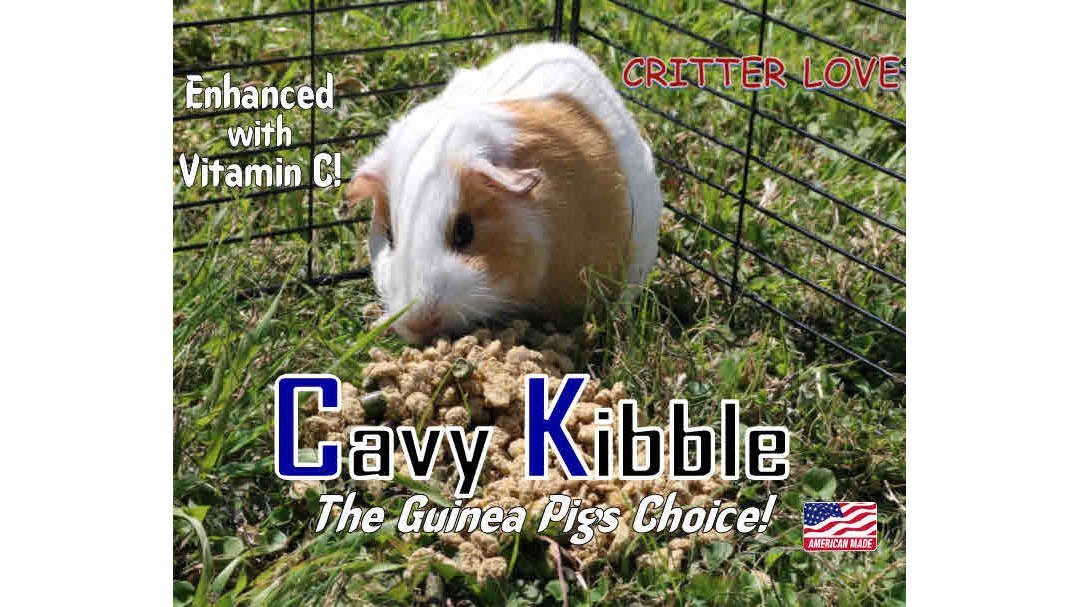
Critter Love® Cavy Kibble — Enhanced with Vitamin C →
Responsible breeders keep meticulous records, and family lineage, and stay available for follow-up questions long after a guinea pig goes home. That standard is the baseline, not the exception.
Guinea Pig Health Check: What to Evaluate
When you meet a guinea pig breeder or receive your new pet, conduct a basic health assessment. Look for clear eyes, clean ears, and a smooth coat without patches of missing fur. Check the teeth, they should be aligned properly and not overgrown.
Observe behavior and energy level. A healthy young guinea pig should be alert, curious, and responsive to sounds. Listen for wheezing or labored breathing, which can indicate respiratory issues. Watch how the breeder handles the guinea pig, calm, experienced handling suggests the animal has been socialized.
Ask about diet and feeding schedule. What hay, pellets, and vegetables has the guinea pig been eating? Get specific recommendations for transitioning to your own feeding routine, because abrupt diet changes can cause digestive upset. Understanding the breeder's nutritional approach helps you maintain consistency during the adjustment period.
Guinea Pig Adoption vs. Buying From a Breeder
Adoption and buying from a breeder are both legitimate paths, but they suit different situations. Instead of a vague "it depends," use this decision guide to match the route to your household, experience level, and goals.
When Adoption Is the Better Fit
Adoption suits you if:
- You want to give a home to a guinea pig in need, including older animals, bonded pairs, or those with special needs.
- You're comfortable with unknown or partial background history and are willing to work with a veterinarian to establish a baseline.
- You value supporting rescue and sanctuary organizations and are flexible on coat type, age, or personality.
- You're patient: rescue animals may need a settling-in period and gradual socialization.
Rescue organizations and shelters often have guinea pigs available, and adoption typically costs less upfront than purchasing from a breeder. Use information about guinea pig adoption and rescue options to explore animals in your area, and apply the same welfare standards you'd use with any source.
When Buying From a Breeder Is the Better Fit
Buying from a responsible breeder suits you if:
- You want more control over genetics, temperament, coat type, and early socialization.
- You want documented health records, vaccination history, and pedigree tracking so you know the animal's background.
- You want an ongoing relationship with the breeder for guidance on diet, behavior, and health.
- You have specific goals, such as a particular breed or coat type, or a guinea pig raised with consistent handling from an early age.
A breeder relationship provides ongoing support and a known family history, which matters if you plan to show, breed responsibly, or simply want predictability in temperament and care needs.
Side-by-Side Decision Criteria
Criterion |
Adoption |
Responsible Breeder |
|---|---|---|
Background history |
Often partial or unknown |
Documented lineage and health records |
Upfront cost |
Typically lower |
Varies with breed and lineage |
Choice of age, coat, temperament |
Limited to available animals |
More control |
Ongoing support |
Varies by organization |
Breeder relationship and follow-up |
Welfare impact |
Supports rescue |
Supports responsible breeding |
Best for first-time owners |
Yes, with patience |
Yes, with a vetted breeder |
A Balanced Rule of Thumb
If your priority is giving an animal a second chance and you're flexible on specifics, adoption is the stronger choice. If your priority is documented health, predictable temperament, and a specific breed or coat type, a vetted breeder is the better fit. Either way, apply the same vetting checklist: ask about housing, health records, socialization, and post-purchase support. Whether you adopt or buy, prioritize animal welfare and long-term health over convenience or cost.
Understanding Hairless Guinea Pigs and Other Specialty Breeds
Specialty guinea pig breeds, particularly hairless varieties, come with specific care requirements that differ from standard-coated guinea pigs. Understanding these differences helps you decide whether a specialty breed suits your lifestyle and capabilities.
Hairless guinea pigs lack the protective coat that other cavies rely on for temperature regulation. They require warmer environments, typically between 75-80 degrees Fahrenheit, to stay comfortable. Their skin is more sensitive to cold, drafts, and direct sunlight.
Other specialty breeds, Peruvian guinea pigs with their long, flowing coats, or Silkie guinea pigs with their soft, curly fur, require frequent grooming to prevent matting and maintain coat health.
Critter Love® Cavy Kibble — Enhanced with Vitamin C →
A responsible guinea pig breeder working with specialty breeds should educate you thoroughly about care requirements before you purchase. They should be honest about the challenges and time commitment involved. They understand that mismatched expectations lead to stressed animals and frustrated owners.
Setting Up Your Guinea Pig's Home
Creating a proper living space is one of the most important decisions you'll make as a guinea pig owner. Your setup directly impacts your pet's health, happiness, and lifespan.
Guinea pigs need spacious, well-ventilated enclosures with room to move, burrow, and exercise. Adequate space reduces stress and allows for natural behaviors. Include hiding spots where your guinea pig can retreat when feeling anxious.
Bedding matters significantly for respiratory health and comfort. Avoid cedar and pine, which contain oils that irritate guinea pig airways. Choose dust-free paper-based bedding or aspen shavings. Change bedding frequently to maintain cleanliness and prevent ammonia buildup from urine.
Fresh hay should make up the bulk of your guinea pig's diet, roughly 80 percent. At Critter Love® LLC, we formulate our Critter Love® Cavy Kibble with enhanced Vitamin C specifically for guinea pig nutritional needs, supporting healthy digestion and addressing the critical vitamin C requirement that guinea pigs cannot produce on their own.
Enrichment prevents boredom and supports mental health. Provide toys for chewing, tunnels for exploring, and platforms for climbing. Rotate toys regularly to maintain interest.
The Guinea Pig Colony Habitat offers a spacious, modular setup designed specifically for guinea pigs, with 10.89 square feet of comfortable living space and easy-to-customize configurations. Pair your habitat with quality bedding like the Critter Love® Small Pet Cage Liner Mats for easy maintenance and comfort.

Finding the right guinea pig breeder requires patience, questions, and a willingness to walk away from breeders who don't meet your standards.
Frequently Asked Questions
What questions should I ask a guinea pig breeder?
Ask about the breeder's experience, breeding goals, and how they select breeding pairs. Request information about the guinea pig's parents, any genetic health screening, and vaccination records. Inquire about the breeder's support after purchase, their return policy, and whether they're available to answer questions about care and behavior. A responsible guinea pig breeder will answer these questions thoroughly and ask you about your setup and experience level.
How can I tell if a guinea pig breeder is responsible?
A responsible guinea pig breeder maintains clean, spacious enclosures with proper ventilation and enrichment. They can discuss their breeding philosophy, explain why they chose specific pairs, and provide documentation of health checks or pedigree information. They care about where their animals go and may ask you about your home setup. They're willing to take a guinea pig back if circumstances change and offer ongoing support to their adopters.
Is it better to adopt a guinea pig or buy from a breeder?
Adoption is a wonderful option and rescue organizations often have healthy, adult guinea pigs ready for homes. Buying from a responsible breeder can be appropriate if you're seeking a specific breed, need health documentation, or want a young animal socialized from the start. Both paths require the same commitment to proper care, housing, and nutrition. Consider your preferences, timeline, and local rescue availability when making your decision.
What should I check before bringing a guinea pig home?
Inspect the guinea pig for clear eyes, clean fur, and a healthy weight. Check that they're alert and responsive. Ask the breeder about the guinea pig's current diet and feeding schedule so you can transition gradually if you plan to change food. Ensure your habitat is ready with proper bedding, hay, vegetables, and enrichment before bringing your new pet home. Have your setup inspected by someone experienced to confirm it meets their needs.


