
Last Updated: October 27, 2026
Quick Summary
An acrylic guinea pig cage uses clear plastic panels instead of wire grids, letting owners see their pets from every angle and leaving no gaps to catch a foot or nose. Acrylic walls block airflow, so a mesh top or open side is needed for ventilation. Smooth walls also wipe clean easily.
- Acrylic gives excellent visibility and smooth walls that leave no gaps for guinea pigs to catch feet or noses.
- Solid acrylic walls block airflow, so ventilation becomes a real design question.
- A mesh lid lets warm, moist air escape, while a solid acrylic lid traps it.
- Choose a hybrid cage with an acrylic front and mesh top and back for both visibility and airflow.
- Spot-clean droppings and wet bedding daily, and do a full clean at least once a week.
Table of Contents
- What Makes an Acrylic Guinea Pig Cage Different
- Guinea Pig Cage Size for Two: How Much Floor Space Is Enough
- Guinea Pig Cage Ventilation: Why Acrylic Walls Need Care
- Acrylic vs. Wire-Grid vs. Hybrid Cages Side by Side
- Durability: Chewing, Scratching and Long-Term Wear
- Guinea Pig Cage Cleaning, Odor Control and Bedding
- Building a DIY Acrylic Guinea Pig Cage Safely
- Choosing Your Habitat and Setting It Up
- Frequently Asked Questions
Critter Love® LLC offers the Guinea Pig Colony Habitat, a modular acrylic habitat for guinea pigs.
What Makes an Acrylic Guinea Pig Cage Different
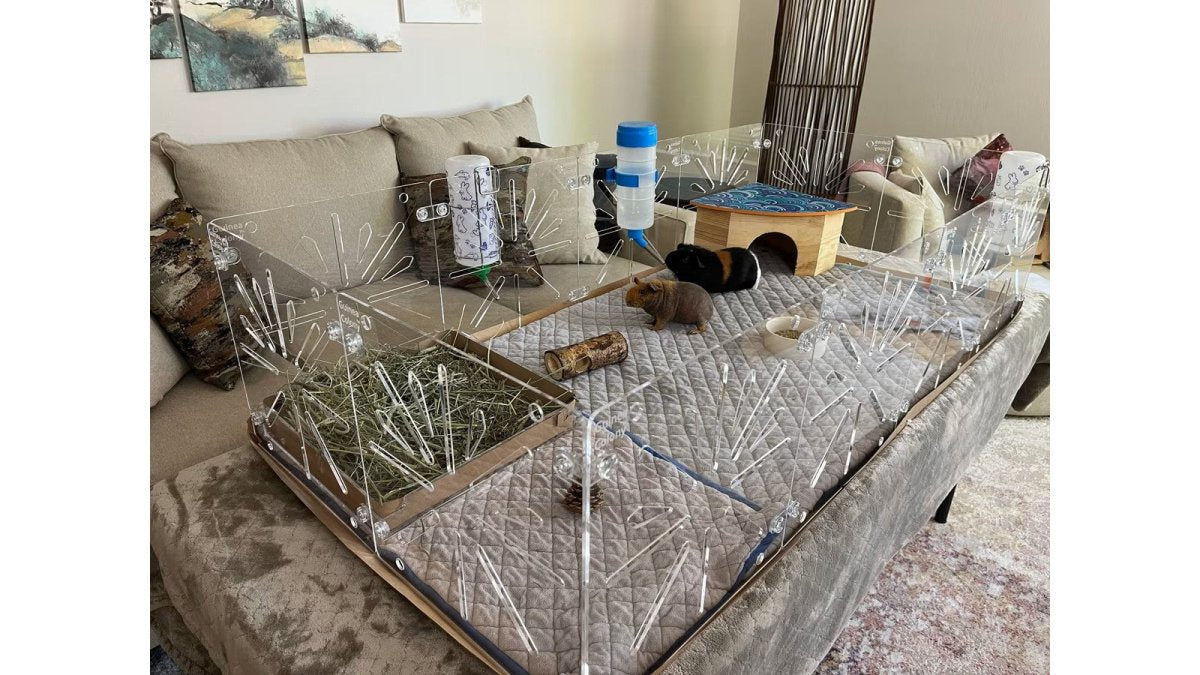
An acrylic guinea pig cage uses clear plastic panels instead of the wire grids found in most traditional enclosures. The panels let you see your pets from every angle, and the smooth walls leave no gaps for a guinea pig to catch a foot or nose in. For a closer look at the risks of generic small pet enclosures and what to avoid, see risks of generic small pet enclosures. Many buyers choose acrylic for exactly those reasons.
Acrylic also has tradeoffs. Solid walls block airflow in a way wire does not, so ventilation becomes a real design question. The material can scratch, and it does not hold up to every kind of wear. Those differences shape everything else in this guide.
Guinea Pig Cage Size for Two: How Much Floor Space Is Enough
The Critter Colony Club Guinea Colony Starter Kit at Guinea Pig Colony Habitat gives 10.89 square feet of living space for two to three guinea pigs, with 14-inch walls. If you are sizing a cage for a pair, look for at least that much floor area and plan accessories that fit inside it. Floor toys in particular eat into usable space, so choose a 3 Piece Floor Toy Combo Pack that fits the footprint you have left.
Guinea Pig Cage Ventilation: Why Acrylic Walls Need Care
The fix is not to drill holes in every panel. It is to design the cage so air can move across the floor. Three factors do most of the work:
- Open top or mesh lid. A full mesh top lets warm, moist air rise out of the cage. A solid acrylic lid traps it. If your cage has a lid, it should be mesh, not solid.
- Panel height relative to the animal. A 14-inch wall is tall enough to contain bedding and a determined guinea pig but short enough that air moves freely over the top edge. Walls much taller than the animal needs create a still pocket at floor level. Match wall height to the species, not to the look of the room.
- Open sides or vented sections. A cage with two or three solid acrylic sides and one or two mesh sides moves far more air than a four-sided acrylic box. If you want the clear look on the front, put mesh on the back or one end.
For general small-animal housing principles, the U.S. Department of Agriculture Animal Welfare Act regulations describe enclosure standards for commercial settings and are a useful reference for airflow and space concepts. USDA Animal Welfare Act and enclosure standards
Acrylic vs. Wire-Grid vs. Hybrid Cages Side by Side
Most cage-shopping guides list features without telling you what they mean day to day. This comparison focuses on the trade-offs that show up after the first month of ownership: airflow, cleaning time, durability, visibility, and total setup cost.
| Feature | Acrylic | Wire-Grid | Hybrid (acrylic base + mesh top/sides) |
|---|---|---|---|
| Airflow | Limited unless vented; ammonia can settle at floor level | Strong; air moves through every side | Good if mesh area is at least one full side plus the top |
| Visibility | Excellent from all angles | Moderate; grids break up the view | Good; clear front, mesh elsewhere |
| Cleaning | Smooth walls wipe clean; bedding stays in | Bedding kicks out through grids; wire collects dust | Mixed; wipe acrylic, brush mesh |
| Durability | Scratches and clouds over time; can crack at edges | Wire can rust at joints; grids bend | Depends on frame quality; acrylic base can scratch |
| Chewing risk | Guinea pigs can gnaw exposed acrylic edges | Low; wire is hard to chew | Low if acrylic edges are covered |
| Setup cost | Higher upfront for clear panels | Lowest upfront | Middle; you pay for both materials |
| Replacement parts | Panels and connectors sold separately | Grids and connectors widely available | Usually proprietary; check before buying |
What the table means in practice. Acrylic wins on looks and on keeping bedding inside the cage. Wire wins on airflow and on cheap, easy replacement. A hybrid cage with a clear acrylic front and mesh top and back is the practical middle ground for most indoor owners: you get the view, the airflow, and a cage that does not trap ammonia.
Durability: Chewing, Scratching and Long-Term Wear
Guinea pigs chew, and acrylic is not immune. Gnawing on corners and scratching against walls can leave marks that cloud the view over time. Some owners also report that acrylic cages become harder to clean once surfaces are scuffed, since bacteria and grime settle into tiny grooves.
Protecting the floor and base pays off. The Critter Love® Small Pet Cage Liner Mats 4 Pack cover the floor, absorb moisture, and make the base easier to maintain. Inspect the walls and joints every few weeks, and replace panels that show deep scratches or cracks.
Guinea Pig Cage Cleaning, Odor Control and Bedding
Cleaning is where acrylic cages shine. Smooth walls wipe clean with a pet-safe cleaner, and removable liners make daily spot cleaning quick. Spot-clean droppings and wet bedding every day, and do a full clean at least once a week.
Odor is controlled mostly through bedding choice and cleaning frequency. Use absorbent bedding and change it before it becomes saturated. Many owners pair a liner with odor control products to keep the cage smelling fresh between full cleans, and select a guinea pig bedding type that suits your cage floor.
Building a DIY Acrylic Guinea Pig Cage Safely
A DIY acrylic cage can save money, but it demands more planning than a purchased habitat. Solid panels need deliberate ventilation cuts or mesh inserts, and every joint must be secure enough that a guinea pig cannot push a panel out. Sharp edges from cut acrylic must be sanded smooth before use.
Community discussions about DIY acrylic cages often warn about ventilation, which is the main reason to be cautious. If you build your own, test the airflow by watching how the cage smells after a day of use, and be ready to add more openings. If you would rather skip the build, a ready-made habitat avoids those risks.
Choosing Your Habitat and Setting It Up
Browse the Guinea Pig Colony Habitat, a modular acrylic habitat with 10.89 square feet of living space for two to three guinea pigs.
Frequently Asked Questions
Are acrylic guinea pig cages safe?
Acrylic cages can be safe when they are sized correctly and ventilated properly. Clear walls do not have sharp edges, and smooth panels avoid the wire-grid gaps where toes and heads can get caught. Ventilation is the main concern: solid acrylic walls limit airflow, so choose a cage with mesh or open top sections and avoid placing it in a stuffy corner. Check the enclosure regularly for scratches or cracks, and keep it away from direct sunlight and heaters.
How big should a guinea pig cage be for two guinea pigs?
Most guidance for two adult guinea pigs points to at least 7.5 square feet of floor space, with larger habitats giving more room for hiding spots, feeding areas and a bathroom corner. A 48 x 24 inch footprint is a common starting point for a pair. Taller walls help keep guinea pigs contained, but floor area matters more than height for daily movement. Measure your floor space before buying, and confirm the habitat's dimensions match that.
How often should you clean an acrylic guinea pig cage?
Spot clean droppings and wet bedding daily, and do a full cleaning at least once a week. Acrylic wipes down easily with mild, pet-safe cleaners, but avoid abrasive pads that scratch the surface and make it cloudy. Rinse thoroughly and dry completely before adding fresh bedding. Disposable floor liners can cut daily cleaning time, though they still need to be changed regularly to control odor.
Can guinea pigs chew through acrylic?
Guinea pigs can scratch and gnaw on acrylic, which over time leaves marks and dulls the surface. Chewing rarely breaks through thick, well-made panels, but thin or cracked panels should be replaced promptly. Providing chew toys and hay reduces the urge to gnaw on the walls. Inspect edges and connectors regularly, since loose bolts or damaged panels are the more likely safety issue.


