
Table of Contents
- What Makes High Quality Pet Food Different
- How to Read Pet Food Labels Without Getting Fooled
- Common Fillers in Pet Food to Avoid
- The Best Diet for Small Pets: Matching Nutrition to Life Stage
- Cost Per Calorie: The Real Math Behind Premium Food
- When High Quality Pet Food Is Worth It (And When It Is Not)
- Frequently Asked Questions
Last Updated: September 27, 2026
What Makes High Quality Pet Food Different
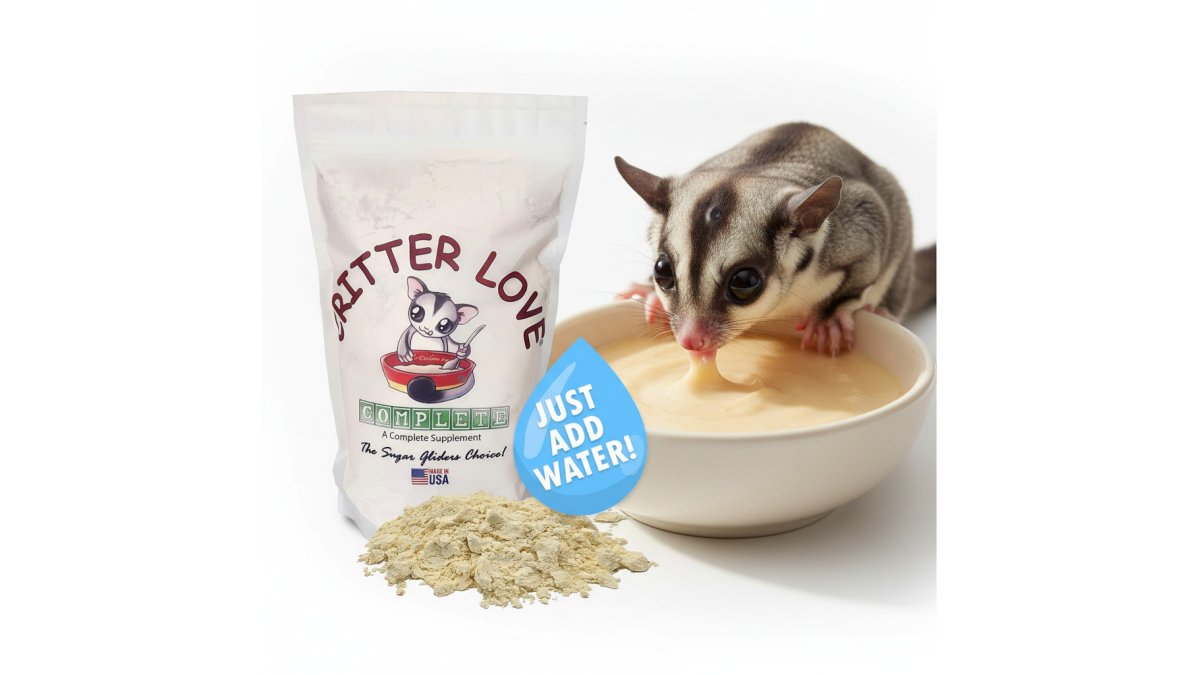
High quality pet food delivers complete, balanced nutrition in a form your animal can actually absorb, not just a bag with a premium label. At Critter Love® LLC, we formulate staple diets for sugar gliders and other small pets, and the difference comes down to ingredient sourcing, nutrient bioavailability, and species-specific design. Our Critter Love® Complete Sugar Glider Food is the most extensively laboratory tested staple on the market today for captive bred sugar gliders, scientifically formulated, veterinarian approved and recommended.

Most mass-market small pet foods are built to hit a price point, relying on fillers, by-products, and synthetic vitamins sprayed on after processing. That approach can keep an animal alive, but rarely helps one thrive.
Your pet's body has to break food down before it can use it. A label can list every vitamin in the book and still deliver poor nutrition if the ingredients aren't digestible. Bioavailability, how much of a nutrient your pet can actually absorb, matters more than the raw number on the package.
How to Read Pet Food Labels Without Getting Fooled
Reading a pet food label without getting fooled means ignoring the front of the bag and studying the back panel: the guaranteed analysis, the ingredient list, and the feeding directions. The front is marketing. The back is data.

Start with the guaranteed analysis: minimum percentages of protein, fat, and fiber, plus moisture. It's a floor, not a promise of quality, two foods can show identical protein percentages while using wildly different ingredients.
Then read the ingredient list in order of weight. Meat-first ingredients should lead. Watch for "splitting," where a manufacturer lists several forms of the same grain separately so no single one outweighs the meat, corn, wheat, and soy listed three ways is still a lot of corn, wheat, and soy.
Guaranteed Analysis vs. Marketing Claims
The guaranteed analysis is the legally required nutrient breakdown; marketing claims like "holistic," "natural," or "premium" are largely unregulated words with no fixed definition. The FDA guidance on pet food labeling explains which terms carry legal weight and which are essentially advertising.
A "vet recommended" claim tells you nothing about who did the recommending.
Critter Love® Complete Sugar Glider Food →
The Dry-Matter Trick Most Owners Never Learn
Label percentages are measured as-fed, meaning they include water. A canned food that is 78% moisture might list 10% protein, while a dry pellet at 10% moisture lists 30%. On paper the pellet looks three times more protein-dense, but on a dry-matter basis they can be nearly identical.
What the Ingredient List Actually Tells You
Ingredients are listed by weight before processing, which is why fresh meat, mostly water, can appear first and still contribute little protein once the water cooks off. A food listing "chicken" first and "chicken meal" fifth may deliver more chicken protein from the meal, because meal is concentrated.
A 60-Second Label Audit
Run this on any bag before you buy:
- Moisture check: note the moisture percentage so you can convert to dry matter
- Protein and fat: convert both to dry-matter basis before comparing
- First ingredient: is it a named protein or a grain?
- Splitting check: are corn, wheat, or soy listed under three or more names?
- Preservative scan: BHA, BHT, or ethoxyquin present?
- Named vs. unnamed: does every protein have a species attached?
If a food fails three or more, the front of the bag is doing the selling for a reason.
Common Fillers in Pet Food to Avoid
Common fillers in pet food to avoid include ground corn, wheat middlings, soybean meal, and unnamed "meat meal" or "animal by-products." These pad out weight and cost while adding little nutritional value.
Here's what to watch for:
- Unnamed proteins: "meat meal," "poultry by-product," "animal digest"
- Split grains: corn, corn gluten, corn bran all listed separately
- Added sugars: corn syrup, molasses, or cane sugar in a small pet diet
- Artificial colors and preservatives: BHA, BHT, ethoxyquin
- Excess salt: often used to make a bland filler more palatable
The Best Diet for Small Pets: Matching Nutrition to Life Stage
The best diet for small pets is one matched to their life stage, because a growing juvenile, an adult, and a breeding animal have genuinely different nutritional needs. Life stage nutrition isn't a marketing gimmick. It's biology.
Cost Per Calorie: The Real Math Behind Premium Food
Cost per calorie is the honest way to compare pet foods, and it usually flips the "premium is too expensive" assumption on its head. A cheaper bag often costs more per usable calorie once you account for fillers, waste, and how much your pet has to eat to feel full.
Critter Love® Complete Sugar Glider Food →
Why Caloric Density Changes Everything
Caloric density is the usable energy in a given weight or volume of food, usually expressed as kilocalories per cup, ounce, or kilogram. A dense food packs more energy into every scoop, so your pet eats less, the bag lasts longer, and the real cost per day can be lower even when the sticker price is higher.
The Four-Step Math
Run this on your own pet's food:
- Step 1: Find the calorie content per cup or per ounce on the label (the "kcal ME" figure)
- Step 2: Divide the bag price by the total calories in the bag to get cost per calorie
- Step 3: Multiply cost per calorie by your pet's daily calorie needs to get cost per day
- Step 4: Compare that daily cost across two or three foods
Here's a worked example. Suppose Food A costs $30 for a bag containing 12,000 kcal, and Food B costs $45 for a bag containing 24,000 kcal. Food A works out to $0.0025 per calorie; Food B to $0.001875. If your pet needs 200 kcal per day, Food A costs about $0.50 per day and Food B about $0.38. The more expensive bag is the cheaper diet, by roughly a quarter.
The Middle-Market Sweet Spot
| What You're Comparing | Cheap Pellet | Formulated Staple |
|---|---|---|
| Ingredient quality | Fillers and by-products | Named, digestible ingredients |
| Caloric density | Lower, more bulk per calorie | Higher, more energy per scoop |
| Nutrient absorption | Lower bioavailability | Higher bioavailability |
| How much you feed | More per serving | Less per serving |
| Cost per day | Often higher than it looks | Often lower than the sticker suggests |
| Long-term value | Looks cheap up front | Costs less over time |
When High Quality Pet Food Is Worth It (And When It Is Not)
High quality pet food is worth it when your pet has specific health needs, is growing, is breeding, or has shown sensitivity to a cheaper diet. Critter Love® Complete Sugar Glider Food is scientifically formulated, veterinarian approved and recommended, and contains protein, calcium, vitamins, minerals, Omega3, Omega6, and amino acids to support these needs.
- Sensitive stomach: if your pet reacts poorly to cheap food, a more digestible diet can end the cycle of upset
- Breeding animals: breeding stock and young animals have higher demands that a maintenance diet won't meet
- Life stage transitions: juveniles and seniors need different support than a healthy adult
- Specific health conditions: a vet may recommend a specialized or prescription diet, and that guidance should come first
Frequently Asked Questions
What are the key indicators of high quality pet food?
Look for a named meat source as the first ingredient, a complete nutritional adequacy statement, and a guaranteed analysis that shows protein, fat, and fiber percentages. High quality pet food lists specific ingredients rather than vague terms like 'meat meal' or 'animal by-products.' It also undergoes formulation research or feeding trials. For small pets like sugar gliders, the best diet for small pets includes calcium-fortified staples and species-appropriate protein. Check for preservatives like ethoxyquin or BHA, which are common in lower-quality kibble.
Does a higher price tag always guarantee better nutrition?
No. Price alone does not guarantee quality. Some expensive brands spend more on marketing than formulation. The real measure is whether the food meets nutritional adequacy for your pet's life stage and uses digestible, meat-first ingredients. A cost-per-calorie analysis often shows that premium foods with higher caloric density require smaller portions, which can narrow the price gap. For sugar gliders, a laboratory-tested staple like Critter Love Complete provides a balanced nutrient profile that generic pellets often miss.
How do filler ingredients affect small pet health?
Fillers like corn, wheat, soy, and unnamed by-products add bulk without much nutritional value. They can reduce digestibility and may trigger food allergies or sensitive stomach issues in small pets. Over time, a diet heavy in fillers can lead to weight problems, poor coat condition, and low energy. For sugar gliders, hind leg paralysis has been linked to calcium deficiency, which fillers can worsen by displacing nutrient-dense ingredients. Choosing a diet with meat-first ingredients and minimal fillers supports metabolic health and pet wellness.
How does diet impact the long-term health of small pets like rabbits and guinea pigs?
Diet directly influences dental health, digestion, and lifespan. Rabbits and guinea pigs need constant access to grass hay for fiber, plus fresh vegetables and a limited amount of high-quality pellets. A diet lacking in fiber can cause dental disease and gastrointestinal stasis, which are common and costly conditions. Guinea pigs also cannot synthesize vitamin C, so their food must include it. Budget foods often miss these species-specific requirements. Investing in a diet formulated for your pet's life stage reduces the risk of chronic health issues.


