
Table of Contents
- What Makes a Sugar Glider Diet Nutritionally Balanced
- Staple Foods: Pelleted Kibble vs. Fresh Food Ratios
- Safe Fruits and Vegetables for Your Sugar Glider
- Toxic Foods for Sugar Gliders: What to Avoid
- Sugar Glider Feeding Schedule and Portion Control
- Troubleshooting Picky Eaters and Budget-Friendly Meal Prep
- Frequently Asked Questions
Last Updated: September 19, 2026
What Makes a Sugar Glider Diet Nutritionally Balanced
The best diet for healthy sugar gliders is built on a complete staple food paired with fresh or freeze-dried produce, not a bowl of fruit alone. At Critter Love® LLC, we've worked with exotic animal nutritionists to understand what captive gliders need. Sugar gliders are omnivorous, so a balanced captive diet must cover protein, calcium, vitamins, and trace minerals in the right proportions. Get that foundation right, and coat condition and energy levels tend to follow.
Why the Calcium-to-Phosphorus Ratio Matters
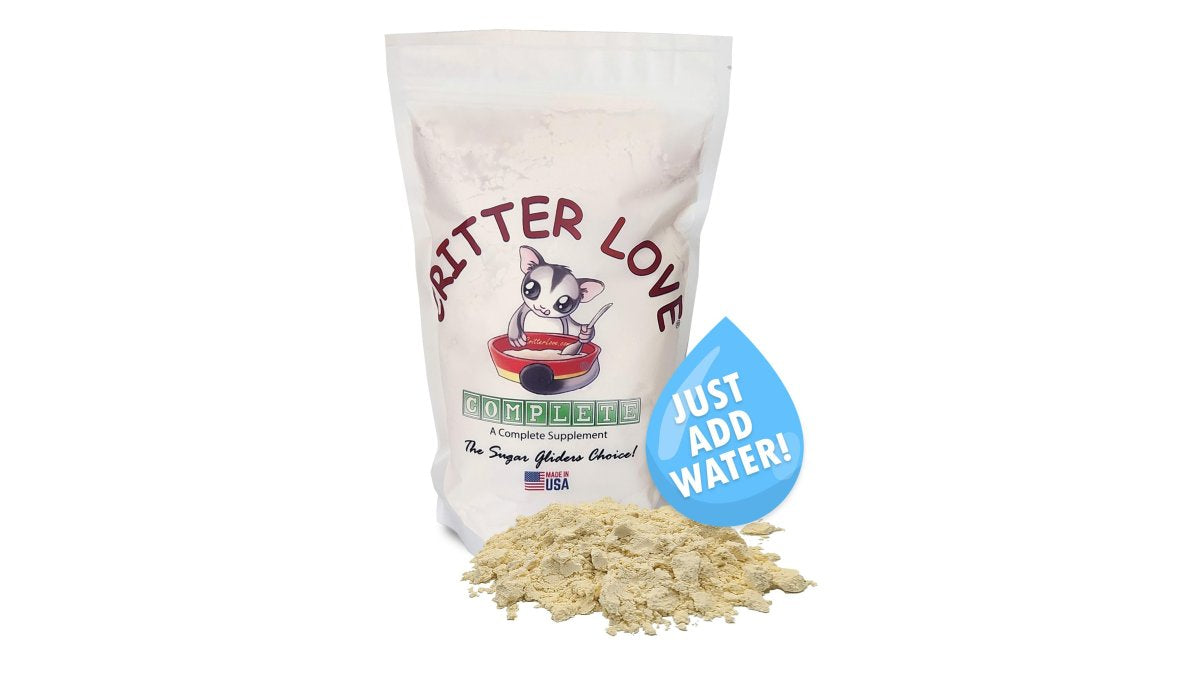
The calcium-to-phosphorus ratio is the single most important number in sugar glider nutrition. When phosphorus outweighs calcium over time, gliders can develop metabolic bone disease, a painful and often irreversible condition; hind leg paralysis is frequently tied to long-term mineral imbalance. A calcium-fortified staple takes the guesswork out of this math. Critter Love® Complete is calcium fortified for bone health and contains protein, vitamins, minerals, Omega 3 and Omega 6 fatty acids, and amino acids, so the ratio is handled before the food reaches the bowl.
Staple Foods: Pelleted Kibble vs. Fresh Food Ratios
Fresh food delivers better hydration and enrichment, but it's hard to hit consistent mineral ratios with produce alone.
The practical answer most experienced keepers land on is a hybrid: a formulated staple food as the base, plus a measured salad portion each day. Critter Love® Complete Sugar Glider Food is designed exactly for this. It's scientifically formulated, veterinarian approved, and pairs with any Critter Love® freeze-dried salad to form a complete nutritional foundation. If you're new to this, the Critter Love [Natural Feeding Manual(/products/critter-love®-natural-feeding-manual) | critterlove.com] walks through preparation and serving sizes step by step.
Diet Approach |
Mineral Balance |
Hydration |
Best For |
|---|---|---|---|
Pellets only |
Inconsistent |
Low |
Emergency backup only |
Fresh produce only |
Hard to control |
High |
Supplement, not base |
Staple + salad |
Consistent |
High |
Daily long-term feeding |
Safe Fruits and Vegetables for Your Sugar Glider
Safe produce for sugar gliders includes papaya, mango, banana, sweet potato, broccoli, peas, kale, cucumber, and sweet peppers, all diced small and served in controlled portions. Fruits and vegetables are not nutritionally interchangeable: each carries its own calcium-to-phosphorus ratio, which determines whether it supports or undermines the mineral balance your staple food establishes. We have done the work for you. Whether you are creating your own salads following our scientifically formulated recipes or using our Freeze-dried salads, you can feel secure the salad you are offering is well balanced for your sugar glider pet.

Calcium-to-Phosphorus Ratios in Common Produce
Most practitioners aim for an overall dietary calcium-to-phosphorus ratio of roughly 2:1 for captive gliders. Very few single produce items hit that target alone, which is why a calcium-fortified staple food anchors the diet. The produce you choose either closes the gap or widens it.
Foods that lean calcium-positive include:
- Kale and collard greens
- Broccoli
- Papaya
- Sweet potato (with skin)
- Cucumber
Foods that lean phosphorus-heavy and should stay a smaller share of the salad:
- Banana
- Mango
- Peas
- Corn
- Most berries
Phosphorus-heavy produce isn't off-limits, it belongs in smaller amounts, balanced against the calcium-fortified staple and calcium-positive vegetables in the same bowl.
Portion Math for the Produce Side
A single adult glider typically receives about one to two tablespoons of staple food per evening, with a similar volume of salad:
- About 70 percent vegetables, favoring the calcium-positive list
- About 30 percent fruit, rotated for variety
- Everything diced to pea size or smaller to prevent choking
- All fresh produce washed thoroughly before serving
Preparation and Storage That Preserves Nutrition
How you prep produce matters as much as what you choose. Pea-sized pieces increase surface area, speeding oxidation and nutrient loss, so prep only what you'll serve within a day or two and store the rest whole.
Toxic Foods for Sugar Gliders: What to Avoid
Toxic foods for sugar gliders include chocolate, caffeine, alcohol, onion, garlic, chives, avocado, and anything sweetened with xylitol. These can cause serious illness quickly, so keep them out of reach entirely. Raw or undercooked meat and unpasteurized dairy are also off the table.
Sugar Glider Feeding Schedule and Portion Control
A workable sugar glider feeding schedule is one meal per evening, served around the same time each night, since gliders are nocturnal. A single glider typically needs roughly one to two tablespoons of staple food plus a similar volume of salad, but that baseline shifts with age, activity level, and reproductive status. Treating it as a fixed number is a common reason gliders gain too much weight or run thin.
A Simple Daily Routine
- Mix the staple food according to the package ratio
- Rehydrate the freeze-dried salad with water
- Combine and serve in a shallow dish
- Remove uneaten fresh food after a few hours to prevent spoilage
- Refresh water daily
Serve at dusk or shortly after. Gliders wake hungry and eat most of their intake in the first few hours of activity. Food left out overnight in a warm room can spoil, so a few hours is the practical window for fresh components.
Life-Stage Specific Portions
A joey, an adult, and a geriatric glider have meaningfully different needs, and the same bowl will not serve all three.
Weight Tracking and Adjustment
Weigh your glider monthly on a small kitchen scale and record the number. A steady weight with a healthy coat is your best signal the diet is working. A gradual decline over two or three months usually means the portion is too small or the glider isn't eating the staple; a gradual increase usually means the portion is too large or the glider is filling up on treats.
Seasonal Adjustments
A glider's needs shift with the seasons. In colder months, some gliders burn more calories maintaining body temperature and may need a slightly larger staple portion. In warmer months, high-water produce like cucumber and melon helps with hydration. Freeze-dried blends keep the nutritional profile consistent even when the produce aisle does not.
Troubleshooting Picky Eaters and Budget-Friendly Meal Prep
- Buy staple food in larger sizes and store it airtight
- Use freeze-dried salads instead of fresh produce you may end up throwing away
- Portion into single servings so nothing spoils
- Skip expensive treat gimmicks and use simple high-protein items like Black Soldier Fly Larvae
A transition plan keeps it organized:
Week |
Old Staple |
New Staple |
Watch For |
|---|---|---|---|
1 |
75% |
25% |
Refusing food, loose stool |
2 |
50% |
50% |
Weight dip |
3 |
25% |
75% |
Coat or energy changes |
4 |
0% |
100% |
Stable weight, good appetite |
If you want the full method behind these ratios, the [Critter Love(/pages/the-critter-love-diet-plan) Natural Feeding Manual | critterlove.com] lays out the reasoning in plain language, and the Merck Veterinary Manual covers the clinical side of small mammal nutrition for anyone who wants to go deeper.
Frequently Asked Questions
What foods are toxic to sugar gliders?
Several common foods are dangerous for sugar gliders. Chocolate, caffeine, alcohol, and onions can cause serious health issues. Avocado contains persin, which is toxic to many small animals. Always avoid processed human foods, artificial sweeteners, and anything containing xylitol.
How much should I feed my sugar glider daily?
A typical adult sugar glider eats about 1 to 2 tablespoons of staple food per day. The exact amount depends on age, activity level, and whether they are breeding. Always remove uneaten fresh food after a few hours to prevent spoilage.
Why is the calcium-to-phosphorus ratio important for sugar gliders?
Sugar gliders need a calcium-to-phosphorus ratio of roughly 2:1 to prevent metabolic bone disease. An imbalance can lead to weak bones, tremors, and hind leg paralysis. Many fruits and insects are high in phosphorus, so a calcium-fortified staple food helps correct the ratio.
Can sugar gliders eat scrambled eggs?
Yes, plain scrambled eggs are safe in small amounts as an occasional treat. Cook them without butter, oil, salt, or seasoning. Eggs provide protein, but they should not replace a balanced staple diet. Offer a pea-sized portion once or twice a week alongside fresh produce and your regular sugar glider diet.
How do I transition my sugar glider to a new diet?
Switch foods gradually over 7 to 10 days. Mix a small amount of the new food with the old, increasing the ratio each day. Watch for digestive upset or refusal. A slow transition helps prevent stomach issues and lets your glider adjust to new flavors and textures. Consult your veterinarian if problems persist.


