
Last Updated: October 22, 2026
Quick Summary
Homemade sugar glider food is worth it only if you follow a complete, tested recipe precisely and maintain strict nutritional balance, including proper calcium-to-phosphorus ratios and vitamin supplementation. Without that discipline and commitment to daily or weekly prep, commercial staple diets are safer, more reliable, and often more cost-effective when you factor in supplements, spoilage, and your time.
- Homemade diets require exact measurements and vitamin-mineral supplements; vague recipes with approximated amounts fail to maintain nutritional balance.
- Daily or weekly prep takes significant time year-round, and fresh homemade food spoils within 24-48 hours in the refrigerator.
- Total cost includes supplements, produce waste, equipment, and your time; ingredient cost alone is misleading.
- Watch for lethargy, tremors, poor coat quality, and behavioral changes as early signs your homemade diet isn't working.
- A hybrid approach using a commercial staple diet as the foundation plus fresh produce for enrichment captures variety without carrying full nutritional burden.
Table of Contents
- Homemade Sugar Glider Food: Core Trade-Offs
- Sugar Glider Nutrition Requirements and Balance
- Homemade Sugar Glider Food Recipes and Preparation
- BML Diet for Sugar Gliders: A Popular Homemade Option
- Sugar Glider Meal Prep: Time and Storage Realities
- Cost Comparison: Homemade vs. Commercial Staple Diets
- Signs Your Sugar Glider's Diet May Be Inadequate
- Making the Decision: Is Homemade Worth It for Your Gliders?
- Frequently Asked Questions
Homemade Sugar Glider Food: Core Trade-Offs
The appeal of homemade sugar glider food is straightforward: you control every ingredient and, in theory, spend less than on prepared diets.
According to North Carolina State University Veterinary Hospital's sugar glider care guidance, fruit-and-sugar-syrup-only diets are not nutritionally balanced and can lead to weak bones, tremors, and seizures.
Here's what homemade sugar glider food requires and whether it makes sense for you.
Sugar Glider Nutrition Requirements and Balance
Sugar gliders need balanced nutrition suited to their relatively low metabolic rate: moderate protein, energy primarily from plant-based carbohydrates (nectar, sap, and gums), limited healthy fats, and carefully balanced calcium, phosphorus, vitamins, and minerals.
Calcium and phosphorus balance is especially critical to prevent metabolic bone disease. A Ca:P ratio of roughly 1:1 to 2:1 is typically recommended.
Protein requirements are low to moderate. Sugar gliders have efficient nitrogen use and low maintenance needs (often under 500 mg crude protein per day for an adult, or around 10–20% of the diet on a dry-matter basis). They obtain protein in the wild mainly from pollen and seasonal insects rather than high volumes of animal matter. In captivity they still require quality protein sources such as gut-loaded insects, eggs, or properly formulated commercial diets and supplements, but excessive protein is unnecessary and may be detrimental. Carbohydrates from fruit and honey alone are not sufficient.
Vitamins and minerals must be supplied in appropriate amounts and ratios as part of a complete diet.
Homemade Sugar Glider Food Recipes and Preparation
Homemade sugar glider food recipes vary widely, but the ones most likely to succeed follow a structured formula. A complete recipe includes a protein base, calcium source, vitamin and mineral supplementation, and carefully measured fruit or vegetable components.
Common Recipe Approaches
Most homemade recipes fall into a few categories: egg-based with added supplements and minimal fruit, meat-egg-vegetable blends with honey or fruit juice, or insect-protein foundations.
The critical difference between a recipe that works and one that doesn't is consistency.
Preparation time varies: some recipes take 15-20 minutes for a week's worth, others require daily work. Be honest about whether you'll actually do daily prep on tired or busy nights.
BML Diet for Sugar Gliders: A Popular Homemade Option
The BML diet is one of the most discussed homemade options in sugar glider communities, designed as a balanced, complete diet using kitchen ingredients.
A typical BML-style recipe combines scrambled egg, raw honey, water, and bee pollen in specific proportions, prepared fresh or stored briefly in the refrigerator.
The appeal of BML is simplicity: a short ingredient list most owners already have at home.
Owners who feed BML successfully follow the recipe exactly and monitor their gliders' behavior and health closely.
Sugar Glider Meal Prep: Time and Storage Realities
The time required for homemade sugar glider food preparation is often underestimated. Daily prep means 365 days per year, and multiple gliders mean multiple servings. If you travel or work long hours, daily prep becomes a real burden.
Batch Preparation: How Long Does It Actually Take?
Preparation time varies by recipe, but most owners fall into one of two patterns:
- Daily prep: Some recipes are designed to be made fresh each evening. That means measuring, cooking, cooling, and cleanup every single day. On tired nights, this is the step most likely to be skipped or approximated.
- Weekly batch prep: Other owners cook a week's worth at once, portion it, and refrigerate or freeze it. The upfront session is longer, but the daily work drops to thawing and serving.
Weekly batch prep looks efficient on paper but requires reliable refrigerator and freezer space plus well-sealing containers. If storage is limited, you drift back to daily prep.
Storage Windows and Spoilage
Fresh homemade food does not last long: most recipes are safe in the refrigerator for 24-48 hours, and shorter windows are recommended for recipes with eggs or cooked meat. Weekly batches need freezing and thawing, which changes texture and may affect nutrient availability.
Plan your storage around these realities:
- Refrigerator: short-term only. Label containers with the preparation date so you are not guessing.
- Freezer: portion before freezing so you thaw only what you will use in one or two days. Repeated thaw-and-refreeze cycles degrade texture and increase spoilage risk.
- Thawing: move portions to the refrigerator to thaw rather than leaving them on the counter. Slow thawing keeps food out of the temperature range where bacteria multiply fastest.
Food Safety: The Non-Negotiables
Food safety is a real concern with homemade diets containing eggs and fresh ingredients. Salmonella and E. coli are risks without careful temperature control and clean storage containers.
- Wash your hands before preparing food and after handling raw eggs or meat.
- Use clean utensils and containers for each batch.
- Keep cooked and raw ingredients separate until you are ready to combine them.
The Convenience Trade-Off
Many owners find the convenience of commercial staple diets outweighs the appeal of homemade control: a prepared diet takes seconds to mix, stores safely for months, and is consistent batch to batch. To judge the trade-off honestly, track your actual prep time for two weeks and compare it against the minutes a complete staple diet would take.
Cost Comparison: Homemade vs. Commercial Staple Diets
The cost argument for homemade feeding is compelling in theory but often misleading in practice. Judge it on total cost of ownership: ingredients, supplements, spoilage waste, equipment, and your time.
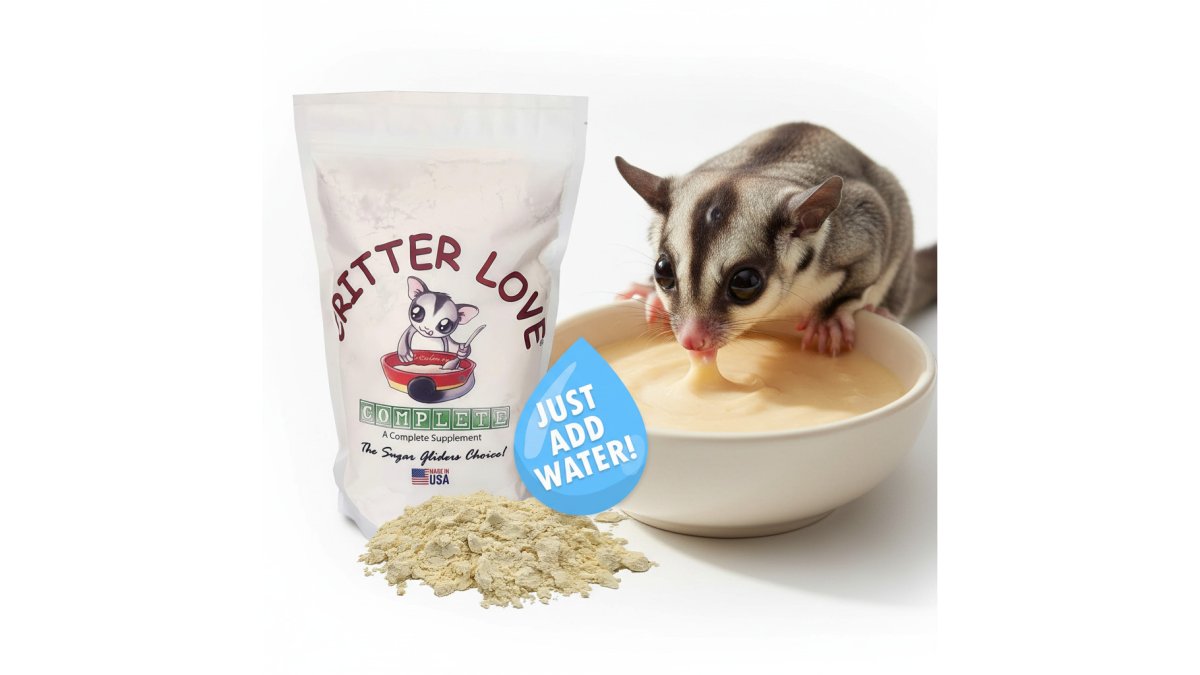
Critter Love® Complete Sugar Glider Food →
What a Complete Homemade Recipe Actually Costs
A complete homemade recipe is rarely just eggs and honey. Most tested recipes call for a protein base, calcium source, vitamin and mineral supplement, and measured produce, each adding cost:
- Protein base: eggs, lean poultry, or insects. Eggs are inexpensive per serving; insects and lean meats cost more per pound.
- Calcium and mineral supplements: calcium powder, multivitamin powder, and bee pollen are sold in small containers that last a while but carry a real upfront cost.
- Produce: fresh fruit and vegetables are the most variable line item and the most likely to spoil before they are used.
Owners commonly underestimate supplements and produce waste. Spoiled ingredients thrown away before the next batch are where homemade budgets quietly break.
What a Commercial Staple Diet Costs
Commercial staple diets are sold as a complete base you mix with water. Critter Love® Complete typically lasts several weeks to months depending on how many gliders you feed, and you're not buying separate supplements or wasting produce. You're paying for a tested, consistent formula rather than assembling one from parts.

The Time Cost Nobody Puts on the Receipt
Time is the largest hidden cost of homemade feeding: daily prep means 365 sessions per year, and weekly batch-cooking still involves shopping, measuring, cooking, cooling, portioning, and cleanup. A commercial staple takes seconds to mix with no shopping trip or cleanup cycle.
A Simple Decision Framework
Use these questions to decide which approach fits your budget and schedule:
- How many gliders do you feed? One or two gliders may make small-batch homemade prep practical; a larger group makes the time cost climb quickly.
- How consistent can you be? If you will follow exact measurements every batch, homemade can be cost-competitive. If you will approximate, you are paying for ingredients without getting nutritional certainty.
- Are you counting supplements and waste? Add calcium powder, multivitamin, bee pollen, and spoiled produce to your homemade total before comparing.
- What is your time worth? If daily prep competes with work or travel, the convenience of a complete staple diet has real value.
- Do you want a hybrid? Many owners feed a complete staple as the foundation and add fresh produce for enrichment. That captures variety without carrying the full nutritional burden of a homemade recipe.
For owners with one or two gliders and a genuine commitment to precise, consistent prep, homemade feeding can save a few dollars per month. For larger groups or busy schedules, the time investment becomes impractical and a complete staple diet is the sensible choice. The real cost of homemade feeding is your time, stress, and the risk of nutritional mistakes.
Signs Your Sugar Glider's Diet May Be Inadequate
If you're feeding homemade food, watch for warning signs that your diet isn't working.
Lethargy or reduced activity is an early warning.
Tremors or shaking, especially in the hind legs, suggest metabolic bone disease or calcium deficiency and require immediate veterinary attention.
Poor coat quality, dull fur, hair loss, or flaking skin, can indicate nutritional imbalance, particularly deficiency in omega fatty acids or vitamin A.
Behavioral changes like increased aggression or excessive self-grooming can signal stress or nutritional problems.
The key is baseline knowledge: know what your gliders normally look like and act like. When something changes, investigate immediately.
Making the Decision: Is Homemade Worth It for Your Gliders?
Whether homemade sugar glider food is worth it depends on your situation. Ask yourself these questions honestly:
Do you have time to prepare food consistently, daily or several times per week? If the answer is "maybe" or "when I remember," homemade feeding isn't for you.
Are you willing to follow a recipe exactly, measuring precisely every time?
Can you afford vitamin and mineral supplements for nutritional completeness?
Do you have reliable refrigerator and freezer space? If storage is limited, daily preparation becomes necessary, increasing time demands.
Are you comfortable monitoring your gliders' health closely and recognizing early signs of nutritional problems?
Critter Love® offers staple diets formulated to eliminate guesswork.
For owners who want to feed naturally, Critter Love® also offers the Natural Feeding Manual, a 15-page guide that walks through homemade feeding methods with the reasoning behind each recommendation, giving you the control and knowledge without reinventing the wheel.

Frequently Asked Questions
Can sugar gliders eat homemade food every day?
Yes, sugar gliders can eat homemade food daily if it's nutritionally balanced and prepared consistently. However, North Carolina State University Veterinary Hospital warns that fruit-and-syrup-only diets are not nutritionally balanced and may be associated with weak bones, tremors, and seizures. Homemade recipes must include adequate protein, calcium, and proper calcium-to-phosphorus balance to support your glider's health long-term.
What should a balanced sugar glider diet include?
A balanced diet includes protein sources, fresh fruits and vegetables, calcium-fortified components, and essential vitamins and minerals. The calcium-to-phosphorus ratio is critical for bone health and preventing metabolic disease. Homemade recipes must be followed consistently and carefully to maintain nutritional adequacy. Commercial staple diets are formulated to meet these requirements without the guesswork.
Can a homemade sugar glider diet cause nutritional deficiencies?
Yes. Homemade diets that rely too heavily on fruit and sugar syrups lack essential nutrients and can lead to serious health problems. Inconsistent preparation or ingredient substitutions can also create imbalances. Working with a veterinarian and following tested recipes carefully reduces this risk, but commercial formulations designed by exotic-animal nutritionists eliminate this concern entirely.
How do you prepare and portion a sugar glider meal plan?
Preparation varies by recipe but typically involves mixing powdered or fresh ingredients, measuring portions carefully, and storing food properly to prevent spoilage. The Critter Love® Natural Feeding Manual provides step-by-step guidance on preparation and servings. Most homemade recipes require daily or every-other-day preparation, which is more time-intensive than simply adding water to a commercial staple diet.
The real question isn't whether homemade sugar glider food can work, it can, if done correctly. The question is whether it's the best use of your time and energy given the risks involved. For most owners, the answer is no. A reliable commercial staple diet, paired with fresh food treats, delivers better nutrition with less stress and risk. That's worth far more than the small amount you might save by making food yourself.


