
Table of Contents
- Why Safe Enrichment Toys Matter for Small Pets
- Mental Stimulation for Small Pets: The Foundation of Enrichment
- Non-Toxic Materials for Small Animal Toys: What to Look For
-
10 Best Safe Enrichment Toys for Small Pets
- 1. Pickin Pocket: Seagrass Foraging Mat ($19.95)
- 2. Merry Go Treat: Spinning Puzzle Feeder ($29.95)
- 3. Gimme a Shot: Interactive Treat Cups ($16.25)
- 4. Stuff a Treat: Hide-and-Seek Foraging Toy ($8.25)
- 5. Cheese Cube Foraging Toy: Natural Chew Enrichment ($13.75)
- 6. Ball N Chain: Floor Toy for Mental Engagement ($4.25)
- 7. 3 Piece Floor Toy Combo Pack: Budget-Friendly Bundle ($5.97)
- 8. The Tumbler: Destructible Chew Toy ($4.49)
- 9. The Shreddable Edible Swing: Natural Yucca Enrichment ($18.95)
- 10. The Tug Toy: Pulley-Based Problem-Solving Toy ($17.25)
- How to Rotate Pet Toys to Maximize Enrichment
- DIY Enrichment Ideas: Budget-Friendly Alternatives
- Common Safety Mistakes to Avoid
- Conclusion: Building a Safe, Stimulating Environment
- Frequently Asked Questions
Last Updated: September 4, 2026
Why Safe Enrichment Toys Matter for Small Pets
Choosing safe enrichment toys for small pets is about more than preventing cage boredom. It is a core part of small animal husbandry that directly influences behavioral health, physical activity, and overall lifespan. A pet that lacks mental stimulation can develop stereotypic behaviors, over-groom, or become lethargic, which are common reasons owners seek vet care (peer-reviewed research).
At Critter Love® LLC, we offer expert-formulated nutrition and high-quality accessories designed to support your companion’s health and happiness. The core principle is simple: a toy must satisfy an instinctual drive without introducing risk. Whether that means supporting foraging behavior or providing teething relief, the right toy turns a cage into an environment that promotes natural behaviors.
Mental Stimulation for Small Pets: The Foundation of Enrichment
Mental stimulation for small pets is the process of challenging their cognitive abilities through problem-solving tasks and sensory experiences. It is the foundation of any good enrichment strategy because it mimics the work an animal would do in the wild to find food and build shelter.
A common mistake is assuming a wheel or a simple bell toy is enough. In practice, true cognitive exercise requires the pet to manipulate an object, make a choice, or work for a reward. This is where treat-dispensing and puzzle feeders excel. They turn mealtime into a hunting session, which reduces stress and increases physical activity. Many exotic pet veterinarians recommend rotating between different types of enrichment, such as puzzle feeders, chewing substrates, and nesting components, to keep the brain engaged (aafco.org).
Non-Toxic Materials for Small Animal Toys: What to Look For
When evaluating non-toxic materials for small animal toys, you must prioritize digestibility and chew resistance over bright colors. The primary risk is not the toy itself, but the breakdown of unsafe components during chewing. If a toy is not made from digestible materials, it can cause a blockage (peer-reviewed research).
Natural Fibers and Safe Chewing Materials
Natural fibers like seagrass, yucca, and untreated wood are the gold standard for chew toys. They provide the durable construction needed for gnawing while being safe if small pieces are ingested. For example, yucca stalks are not only chew-safe but also biodegradable, offering a texture that satisfies the urge to shred.
Avoiding Toxic Dyes and Harmful Chemicals
You should avoid toys with painted surfaces or synthetic fabrics unless the manufacturer explicitly states they use food-grade dyes. Many commercial toys use glues and dyes that are not digestible. A good rule of thumb is the "scratch test": if you can scrape off color with a fingernail, it is likely a surface dye that could chip off and be eaten. Look for toys that rely on the natural color of the material rather than artificial coloring.
10 Best Safe Enrichment Toys for Small Pets
We have selected these ten toys based on safety protocols for different species, material transparency, and their ability to support instinctual play. Each option below uses either natural fibers, food-grade acrylic, or destructible materials that are safe for supervised and solo play.
1. Pickin Pocket: Seagrass Foraging Mat ($19.95)
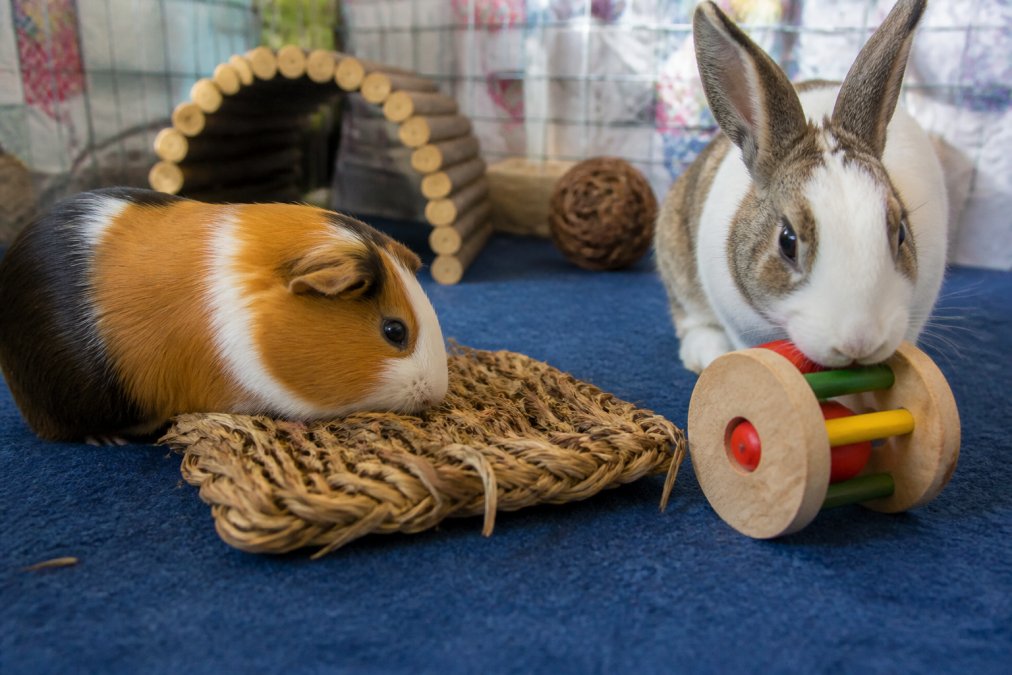
This is our top pick for owners who need a versatile, low-mess foraging option. The Pickin Pocket is a folded seagrass mat with c-links, filled with crinkle paper. You hide treats inside the folds, forcing your pet to use their nose and paws to extract the reward. It is excellent for sugar gliders and birds who enjoy digging. The seagrass is a natural fiber that is safe to chew, though you should inspect the c-links regularly for wear.
2. Merry Go Treat: Spinning Puzzle Feeder ($29.95)
For pets that need a physical challenge, the Merry Go Treat is a hanging, spinning forager that tests agility. It tips and teeters in mid-air, requiring the pet to stabilize it while retrieving treats from clear cups. This is a strong choice for cognitive exercise and is best used during supervised play sessions because the hanging mechanism requires spatial awareness that younger pets may not have yet.
3. Gimme a Shot: Interactive Treat Cups ($16.25)
This toy features three clear acrylic cups strung with cogs, beads, and a bell. It is a simpler version of a puzzle feeder, ideal for pets that are new to enrichment. You place a salad piece or treat in the cups, and the pet must bat at the beads to swing the cups and dislodge the food.
4. Stuff a Treat: Hide-and-Seek Foraging Toy ($8.25)
The Stuff a Treat toy is a budget-friendly way to encourage natural foraging behavior. You stuff treats into the crevices of the toy, and the pet works to pull them out. It supports dental health through chewing and is suitable for sugar gliders, guinea pigs, rabbits, and birds.
5. Cheese Cube Foraging Toy: Natural Chew Enrichment ($13.75)
Crafted from a natural, pet-safe chewable material, the Cheese Cube satisfies the instinctual need to gnaw. It is a simple, wholesome toy that supports dental health and provides mental stimulation to reduce stress. This is a good option for rabbits and guinea pigs who are heavy chewers.
6. Ball N Chain: Floor Toy for Mental Engagement ($4.25)
This interactive floor toy is designed to be pushed, pawed, and problem-solved. You can tuck fresh greens inside, which encourages the pet to roll the ball to release the food. It is perfect for encouraging physical activity in guinea pigs and rabbits who spend most of their time on the cage floor.
7. 3 Piece Floor Toy Combo Pack: Budget-Friendly Bundle ($5.97)
If you are building a rotation from scratch, this combo pack offers three different floor toys in one value bundle. It provides variety for pushing, rolling, and exploring behaviors. This is the best entry point for owners who are unsure which type of toy their pet prefers.
8. The Tumbler: Destructible Chew Toy ($4.49)
Some pets are destructive by nature, and trying to stop that is a losing battle. The Tumbler is a destructible chew toy packed with natural textures. It is designed to be torn apart, which is a safe outlet for that destructive energy, keeping them away from cage bars and unsafe plastics.
9. The Shreddable Edible Swing: Natural Yucca Enrichment ($18.95)
This is a 2-in-1 toy that functions as a swing and a chew toy, crafted from 100% natural yucca stalks. It is completely safe and biodegradable. You can tuck treats into the fibers for extra foraging fun, and once shredded, replacement stalks are available.
10. The Tug Toy: Pulley-Based Problem-Solving Toy ($17.25)
The Tug Toy is a pulley system loaded with bracelets and charms. The pet must figure out how to pull the bracelets through the pulleys to carry them back to their pouch. This is a complex problem-solving toy best suited for sugar gliders who have mastered simpler puzzle feeders.
Toy |
Price |
Key Material |
Best For |
Play Type |
|---|---|---|---|---|
Pickin Pocket |
$19.95 |
Seagrass |
Sugar gliders, birds |
Foraging, digging |
$29.95 |
Acrylic, plastic |
Agile climbers |
Spinning puzzle |
|
Gimme a Shot |
$16.25 |
Acrylic |
Beginners |
Batting, swatting |
Stuff a Treat |
$8.25 |
Fabric/rope |
Multi-species |
Hide-and-seek |
Cheese Cube |
$13.75 |
Natural chewable |
Rabbits, guinea pigs |
Gnawing |
Ball N Chain |
$4.25 |
Plastic/rope |
Floor dwellers |
Pushing, rolling |
3 Piece Combo |
$5.97 |
Mixed |
New owners |
Variety |
The Tumbler |
$4.49 |
Natural textures |
Heavy chewers |
Destructible |
Edible Swing |
$18.95 |
Yucca |
All small pets |
Shredding, swinging |
The Tug Toy |
$17.25 |
Pulleys, charms |
Sugar gliders |
Problem-solving |
How to Rotate Pet Toys to Maximize Enrichment
Knowing how to rotate pet toys is often the difference between a toy that gets ignored and one that provides months of value. The goal is to trigger "novelty response," where the brain releases dopamine when encountering something new.
The Rotation Schedule That Works
A simple schedule is to offer 3 to 4 toys at a time, then swap them out every 3 to 4 days. Do not wait until the pet looks bored; rotate proactively. Keep a "toy box" of 8 to 10 items that you cycle through. This prevents habituation, where the pet stops noticing the toy entirely.
Solo Play vs. Supervised Play: When to Rotate
You should distinguish between toys for solo play and those requiring supervised play. Destructible toys like The Tumbler or the Edible Swing are safe for solo play if they are made from digestible materials. However, toys with strings, pulleys, or acrylic parts, like The Tug Toy or Merry Go Treat, should be used during supervised play sessions to prevent entanglement.

DIY Enrichment Ideas: Budget-Friendly Alternatives
Commercial toys are convenient, but some of the best enrichment comes from household items. A common DIY approach is to take a cardboard egg carton, fill it with hay and a few treats, and let the pet shred it to find the food. This supports nesting components and foraging behavior.
Another budget-friendly idea is creating a snuffle mat from a fleece blanket cut into strips and tied to a rubber mat. Hide pellets in the fleece strips to encourage rooting. For chewing, untreated cardboard tubes from paper towel rolls make excellent destructible toys. Always ensure the glue used in these tubes is minimal, and remove any plastic tape or labels first. For safety, avoid DIY toys with wire, elastic bands, or small plastic eyes that can be swallowed.
Common Safety Mistakes to Avoid
The most frequent safety issue we see is choosing toys designed for larger animals, like dogs or parrots, and giving them to smaller pets. A toy that is too heavy can injure a sugar glider, and wood treated for dogs may contain chemicals that are toxic to smaller species.
Another critical mistake is ignoring wear and tear. A toy with frayed ropes or cracked acrylic should be discarded immediately. While many owners focus on pet safety standards, the responsibility for daily inspection falls on you. A good habit is to give every toy a "pinch test" during cage cleaning: if you can pinch and tear the material easily with your fingers, it is too weak for your pet and could be broken off and ingested.
Conclusion: Building a Safe, Stimulating Environment
Providing safe enrichment toys for small pets requires a shift in mindset from "entertainment" to "habitat enrichment." You are not just buying a product to occupy your pet; you are building an environment that supports behavioral health and prevents boredom. The best strategy combines commercial puzzle feeders with DIY shreddable items, all made from non-toxic materials.
Start by selecting two or three toys from the list above that match your pet's species and activity level. Rotate them weekly, and inspect them daily for damage. For a complete range of vet-recommended foraging toys and natural chews, explore the Critter Love® LLC collection designed to support your companion's health and happiness. Join thousands of pet owners who trust Critter Love for reliable care, expert guidance, and fast, dependable shipping. View Products.
Frequently Asked Questions
What makes an enrichment toy safe for small pets?
Safe enrichment toys for small pets must use non-toxic, digestible materials like natural fibers, wood, and seagrass. Avoid toys with small detachable parts, toxic dyes, or chemical coatings. Check that edges are smooth and there are no sharp points. Inspect toys regularly for wear and replace damaged ones immediately. Look for toys made from materials your pet can safely chew without risk of intestinal blockage.
How often should I rotate enrichment toys for my small pet?
Rotate toys every 3-7 days to prevent boredom and maintain mental stimulation. A simple system: keep 3-4 toys in rotation and store the rest. Reintroduce stored toys after 2-3 weeks—they feel new again. This approach keeps your pet mentally engaged without overwhelming their space. For destructible toys like The Tumbler, replace them once heavily worn rather than rotating.
What are the best non-toxic materials for small animal toys?
The safest non-toxic materials for small animal toys include natural yucca stalks, seagrass, untreated wood, and natural fibers like jute and sisal. Avoid plastic toys with BPA, PVC, or phthalates. Look for toys dyed with natural, pet-safe colorants instead of synthetic dyes. Products like The Shreddable Edible Swing use 100% natural yucca stalks, making them both safe and edible if your pet chews through them.
Why is mental stimulation important for small pets?
Mental stimulation prevents boredom, reduces stress, and supports natural foraging and problem-solving behaviors. Small pets without enrichment may develop destructive habits, excessive chewing, or behavioral issues. Interactive toys and puzzle feeders activate their cognitive abilities, promote physical activity, and improve overall health. Enrichment toys that encourage foraging behavior tap into instinctual drives, keeping your pet mentally and physically active.


