
Table of Contents
- Start with the Right Fence for Mini Cattle Breeds
- Best Fence Height for Mini Cows: Exact Measurements
- Woven Wire Fencing for Cattle: Field Fence and Fixed-Knot Options
- Electric Fence for Mini Cattle: Setup and Wire Spacing
- Compare Fence Types: Pros, Cons, and Costs
- Cattle Fence Maintenance Checklist
- Conclusion
- Frequently Asked Questions
Last Updated: October 9, 2026
Start with the Right Fence for Mini Cattle Breeds
Finding the best fencing for mini cattle breeds starts with one number: height. Miniature cattle need a fence at least 48 inches tall, with woven wire mesh and a strand of electric wire to back it up.
Mini cattle look like lawn ornaments. They are not. Critter Love® LLC helps families raising micro and mini cattle alongside Nigerian Dwarf goats.
Below, we break down exact measurements, compare woven wire against electric and barbed options, and give you a maintenance checklist you can actually use.
Best Fence Height for Mini Cows: Exact Measurements
The best fence height for mini cows is 48 inches for woven wire, with electric offsets bringing the effective barrier to roughly 42 to 48 inches of vertical coverage. Anything under 42 inches invites jumping.
Here is how the measurements break down by animal:
Animal |
Minimum Height |
Recommended Height |
Notes |
|---|---|---|---|
Miniature cattle (adults) |
42 inches |
48 inches |
Jumpers need the full 48 |
Calves |
36 inches |
42 inches |
Small enough to slip through wide mesh |
Mini cattle with horns |
48 inches |
54 inches |
Horns catch in loose wire |
Nigerian Dwarf goats (for comparison) |
48 inches |
52 inches |
Goats climb; cattle push |
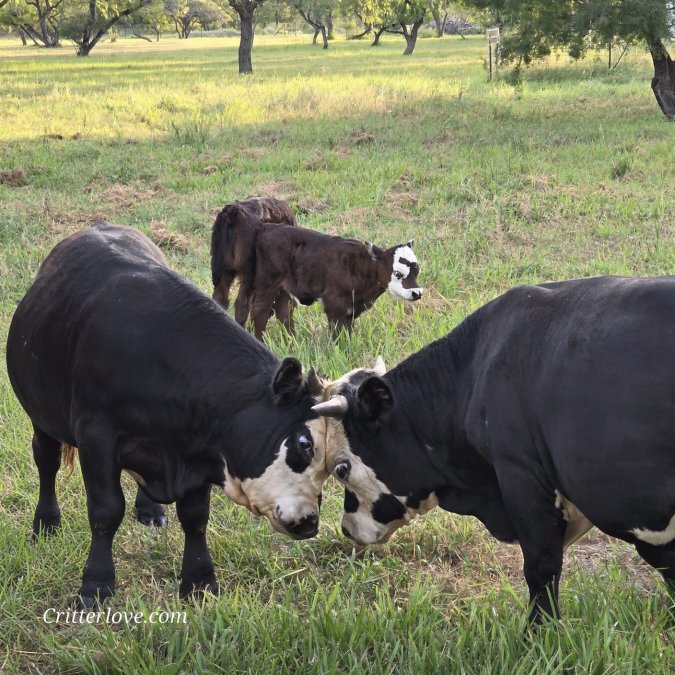
Micro Cattle
Breed and temperament matter as much as size. Highland cattle carry heavy coats and wide horns, so they need more clearance than a polled Dexter. Calves and flighty breeds test a fence harder than a calm, older cow.
Woven Wire Fencing for Cattle: Field Fence and Fixed-Knot Options
Woven wire fencing for cattle is the backbone of most mini-cattle setups, and the fixed-knot style is the version to choose. Fixed-knot mesh locks each wire intersection in place, so the fence holds its shape when an animal leans on it.
Field fence comes in a few styles:
- Fixed-knot: Wire crossings are knotted and cannot slide. Best for animals that push and rub.
- Woven (hinged) knot: Crossings can shift slightly. Cheaper, but it deforms over time.
- Mesh spacing: Look for vertical stay wires set 6 inches apart near the bottom, widening to 12 inches higher up.
- Wire gauge: Heavier gauge wire resists bending and lasts longer in wet conditions.
For mini cattle, a fixed-knot field fence with tight bottom spacing keeps calves from slipping through and stops adults from bowing the wire. Pair it with wooden corner posts set deep, because tension pulls hardest at the corners.
Mesh spacing at the bottom matters more than total height. A calf will find a 12-inch gap every time.
Electric Fence for Mini Cattle: Setup and Wire Spacing
An electric fence for mini cattle works best as a secondary barrier, not a standalone one. Run one or two strands of high-tensile wire on offset brackets outside your woven fence, spaced about 10 to 12 inches apart. The goal is not to hurt the animal but to make the fence memorable enough that it stops testing.
Wire spacing and height for mini cattle
Mini cattle are shorter than standard breeds, so the hot strand sits lower than a full-size setup. A workable layout:
- Top strand: 30 to 36 inches, at nose height for a standing adult. This is the strand that does most of the training.
- Second strand: 18 to 24 inches, for calves and for animals that try to go under.
- Third strand (optional): 10 to 12 inches, only if you have persistent calf pressure or predators digging.
On a 48-inch woven fence, mount the offsets on the inside so the hot wire sits roughly 8 to 12 inches off the mesh, preventing shorts during wet weather or when the fence flexes.
Energizer sizing
Energizer output is rated in joules, and the number that matters is the stored joule rating, not the advertised "miles of fence" claim. Size for at least 1 joule of stored energy per mile of single-strand wire, then double it for safety margin.
Low-impedance energizers are the right choice for pasture because they maintain voltage through light vegetation and wet conditions. Battery and solar units work fine for remote paddocks, but check the joule rating on the box, not the marketing copy.
Grounding: the part most owners get wrong
Poor grounding is a common reason a hot wire feels weak or dead. The rule of thumb is three feet of ground rod per joule of energizer output, driven at least six feet apart, in moist soil if possible. A 6 joule energizer may require roughly 18 feet of ground rod, usually three 6-foot rods. Run the ground wire with no splices, and keep the ground system at least 50 feet from any utility or barn grounding system.
Voltage targets and troubleshooting
A properly working fence should read at least 4,000 to 5,000 volts on a digital tester at the far end of the run. Readings below 3,000 volts usually mean a fault. Walk the fence with the tester and look for:
- Vegetation touching the hot wire, especially tall grass and weeds
- A broken or sagging strand touching a post, T-post, or the woven wire
- A cracked or dirty insulator
- A gate handle that is not fully engaged
- A lightning-damaged energizer or a blown fuse
Often, the problem is a grounded fault, not a dead unit. Fix the fault before you replace the energizer.
Training mini cattle to respect the fence
Mini cattle learn electric fencing quickly when the first encounter is set up correctly. Build a small training paddock with a single hot strand at nose height, put the animals in with plenty of feed and water, and let them meet the wire on their own terms. Most respect the fence within a few days.
Once the herd respects the hot wire, open the paddock up and rely on the electric strand as the backup to the woven perimeter. Check voltage weekly for the first month, then monthly, and always after a storm.
Compare Fence Types: Pros, Cons, and Costs
Woven wire is the best all-around choice for mini cattle, electric is the best add-on, and barbed wire is the one to avoid. Here is how the main options compare on containment, safety, and lifespan.
Fence Type |
Pros |
Cons |
Best For |
Typical Lifespan |
|---|---|---|---|---|
Woven wire (fixed-knot) |
Strong, safe, contains calves, holds shape when leaned on |
Highest material use, needs solid bracing |
Primary perimeter |
20-30 years with treated posts |
Electric (hot wire) |
Cheap to add, trains animals fast, easy to reconfigure |
Needs grounding, vegetation control, and power |
Secondary barrier |
10-15 years for wire, less for energizer |
Barbed wire |
Low material cost, familiar to many owners |
Cuts hides, traps horns, high injury risk on mini cattle |
Not recommended for mini cattle |
15-20 years |
High-tensile smooth wire |
Durable, holds tension, good for long runs |
Needs bracing, insulators, and precise tensioning |
Large perimeters |
20-30 years |
Pipe or tube panel |
Very strong, no entanglement, good for corrals and gates |
Expensive per foot, not practical for long perimeter runs |
Holding pens, gates, working areas |
30+ years |
What fencing actually costs per foot and per acre
Material prices move with steel and lumber markets, so treat these as planning ranges rather than quotes. Pricing depends on quantity, dates, and delivery. View products for current prices.
Electric offset wire is the cheapest upgrade you can make. One or two strands of high-tensile wire on offset brackets, plus insulators, a ground rod set, and an energizer, commonly runs $0.50 to $1.50 per linear foot in materials.
High-tensile smooth wire for a large perimeter requires bracing, tensioners, and insulators. Barbed wire is often a lower cost option, but the savings can evaporate the first time an animal needs stitches or a horn has to be cut out of a tangle.
Lifecycle and maintenance comparison
The upfront number is only half the story. Woven wire costs more to install but needs less repair, and a well-braced fixed-knot fence can go years with nothing but re-tensioning. Electric is cheap to install but carries ongoing costs: energizer power, vegetation clearing, tester batteries, and the occasional lightning-damaged unit.
A practical way to think about it: budget the woven wire as your permanent asset and the electric strand as a consumable you will replace or upgrade every decade. That split keeps the big-ticket decision (perimeter material) separate from the small-ticket one (hot wire and energizer), so you are not tempted to cheap out on the part that has to last.
Cattle Fence Maintenance Checklist
A cattle fence maintenance checklist keeps small problems from becoming escapes. Walk your perimeter on a schedule, not just when something breaks.
- Walk the full perimeter monthly and after any storm
- Check corner and gate posts for leaning or rot
- Test the electric strand with a fence tester, not a hand touch
- Clear vegetation touching the hot wire
- Re-tension sagging woven wire
- Inspect bottom mesh for gaps calves can squeeze through
- Check gates for sag and latch wear
- Look for rubbed or broken wire where animals lean
Vet checks, vaccination records, and pedigree tracking all depend on animals staying where they belong. A fence that fails at 2 a.m. undoes months of careful herd management.
Conclusion
The best fencing for mini cattle breeds comes down to height, mesh spacing, and a backup strand of electric. Get those three right and you will spend far less time chasing animals and more time enjoying your herd.
If you are adding mini cattle or Nigerian Dwarf goats to your homestead, Critter Love® LLC can help you get started. We offer live animals backed by a live arrival guarantee, expert guidance from people who raise these breeds, and fast shipping within 24 business hours. Our team has helped over 10,000 customers build healthier herds and happier homes.
Get started with Critter Love® LLC and bring home healthy mini cattle with the guidance to keep them safe.
Frequently Asked Questions
What type of fence is best for mini cattle?
Woven wire or fixed-knot mesh fencing with a minimum height of 48 inches is the best choice for mini cattle. It provides a physical barrier that prevents escapes and reduces injury risk. Electric fencing can be added as a psychological deterrent, especially for breeds known to be escape artists. Always ensure vertical stay wires are spaced no more than 6 inches apart to prevent calves from getting stuck.
How tall should a fence be for mini cows?
For adult mini cows, a fence height of 48 inches is recommended. For calves or smaller breeds like Miniature Zebu, 42 inches may suffice, but 48 inches offers a safer margin. If your mini cattle are known jumpers, consider a 60-inch fence. Remember that height alone isn't enough; proper wire spacing and tension are equally important for containment.
Can mini cattle be kept behind electric fencing?
Yes, mini cattle can be kept behind electric fencing, but it should not be the sole barrier. Use a minimum of two strands of high-tensile wire, with the top strand at 36-40 inches and the bottom at 18-24 inches. A powerful energizer (at least 2 joules) and proper grounding are essential. Electric fencing works best as a supplement to a physical fence like woven wire.
How many strands of wire do mini cattle need?
For electric fencing, use at least two strands for adult mini cattle and three strands for calves or smaller breeds. Space strands 8-12 inches apart, starting at 18 inches from the ground. For woven wire, a single roll of field fence with vertical stay wires every 6 inches is sufficient. Always check local wildlife pressure; more strands may be needed if predators are a concern.


