
Table of Contents
- Why Mini Cattle Develop Behavioral Problems
- Signs of Stress in Miniature Cattle
- Best Practices for Handling Mini Cattle
- Socialization Techniques for Bottle-Fed Calves
- Nutritional Requirements for Mini Cattle Health
- Facility Design for Small-Scale Hobby Farms
- Building a Consistent Routine and Herd Health Program
- Frequently Asked Questions
Last Updated: October 4, 2026
Why Mini Cattle Develop Behavioral Problems
Preventing behavioral issues in mini cattle starts with one fact: these animals are creatures of habit, and most problems trace back to stress, inconsistency, or a mismatch between their instincts and their environment. Calm animals come from predictable routines, not discipline.
Miniature cattle are not scaled-down versions of full-size breeds. Their temperament quirks shape how they react to handling, housing, and herd changes.
Miniature-Specific Behavioral Traits
Mini cattle bond closely with their handlers, which cuts both ways. A well-socialized mini can be gentler than many full-size cattle; a poorly socialized one becomes pushy because it has learned people are easy to move.
Watch for these traits:
- Strong herding instinct, even in small groups
- Quick attachment to one person or one routine
- Sensitivity to sudden changes in feed or housing
Because minis are smaller, owners sometimes treat them like pets rather than livestock. That is where trouble starts.
Signs of Stress in Miniature Cattle
Knowing the signs of stress in miniature cattle is the fastest way to catch a problem before it becomes a habit. Stress shows up in behavior long before it shows in weight or health.
Common signals include:
- Pacing along a fence line or gate
- Head-butting or pushing at feeders and waterers
- Refusing to move forward when asked
A single sign means little. A pattern that repeats at the same time each day tells you the routine or environment needs to change.
Best Practices for Handling Mini Cattle
The best practices for handling mini cattle come down to calm, slow movement and reading the animal's space.
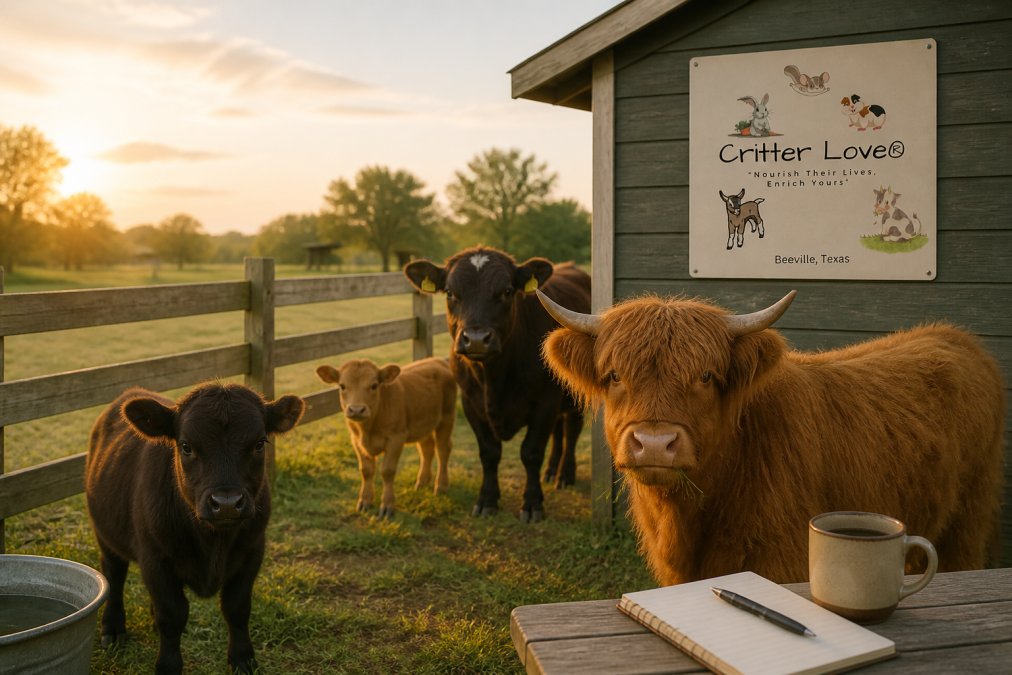
Mini Cattle
Start every session the same way: approach from the side, speak in a low, steady voice, step toward the shoulder to move the animal forward, and stop the moment it responds.
Using the Flight Zone and Point of Balance
The flight zone is the space around an animal that, when entered, causes it to move away. The point of balance sits at the shoulder: step behind it and the animal moves forward; step ahead and it backs up or turns.
A few rules keep this safe:
- Never rush the flight zone. Enter slowly and let the animal adjust.
- Use the point of balance to steer, not a rope or a shove.
- Give the animal an escape route so it never feels cornered.
Mini cattle often have a smaller flight zone than full-size breeds, so you can accidentally crowd them. A full-size beef animal may start to move when you are 5 to 10 feet away, while a halter-broke mini may hold its ground until you are within 2 to 4 feet; walk past that point and you are pushing, which teaches a mini to lean back into pressure.
Handler and Animal Safety Protocols
Small size does not mean low risk. A 300- to 500-pound mini can still break a foot, dislocate a finger, or knock a handler down, and horned or tipped animals add another layer. Build these habits into every session:
- Work in pairs when moving an animal that is new, nervous, or known to push.
- Wear closed-toe boots with a defined heel. Sandals and sneakers are how toes get broken.
- Keep a clear path to an exit. Never let yourself get pinned between an animal and a solid wall or gate.
Low-Stress Handling in Practice
Low-stress handling is a set of small choices repeated until they become the animal's expectation. The fastest payoffs:
- Move the herd, not the individual, whenever you can. Cattle settle faster in a group.
- Use solid-sided panels rather than open fencing when you need an animal to move forward. If it can see through the fence, it will try to go through it.
- Work at the animal's pace on the first pass. Speed comes later, once the routine is boring.
A common pattern is a mini that handles beautifully for one person and turns difficult for everyone else, because it learned one person's cues and no one else's. Rotate handlers early so the animal generalizes the behavior.
Positive Reinforcement: The Angle Most Guides Skip
Most handling advice focuses on pressure and release, what to do when the animal moves wrong. Positive reinforcement flips that: reward the behavior you want and let the unwanted behavior go unrewarded.
For mini cattle, the practical version looks like this:
- Target training. Teach the animal to touch its nose to a target (a hand, a stick with a soft tip, or a feed scoop) and reward. Once the target is reliable, you can use it to load, move, or hold an animal still without ever touching it.
- Clicker or marker training. A click or a consistent word marks the exact moment the animal did the right thing, then a small feed reward follows. The marker is what makes the timing work; without it, the reward lands too late to teach anything.
- Station training. Teach the animal to stand on a mat or in a specific spot while you work around it. This is how you get a mini to hold still for hoof trimming or a vet check without a chute.
Keep sessions to a few minutes, end on a success, and use a reward the animal actually wants. A small amount of familiar feed beats a novel treat, because novel food raises excitement, the opposite of what you are teaching.
Handling During Show Season
Show season adds stress: trailering, new grounds, unfamiliar animals, and standing around. Prepare in advance rather than on the day.
- Practice loading and unloading at home until it is routine.
- Bring the animal's own feed and water so the diet does not change on the road.
- Arrive early enough that the animal can settle before it is handled.
A mini handled calmly and consistently at home will usually handle the show ring the same way. The work you do in the pasture is what shows up on the day.
Socialization Techniques for Bottle-Fed Calves
Socialization techniques for bottle-fed calves matter more than most owners expect. A bottle calf that only knows people can grow into a pushy adult with no idea how to act around other cattle.
Here is how to handle it:
- Feed on a schedule so the calf learns predictability.
- Handle the calf daily, but keep sessions calm and brief.
- Introduce it to other calm cattle as soon as it is safe to do so.
- Set boundaries early. No head-butting, no climbing, no pushing.
- Use positive reinforcement. A scratch or a small treat for standing quietly works better than a scold.
That last point is the one most guides skip. Positive reinforcement works on cattle as well as on dogs: reward the behavior you want and you will see it more often.
Nutritional Requirements for Mini Cattle Health
Nutritional requirements for mini cattle health are easy to get wrong, because minis need less feed than their size suggests.
A balanced plan usually includes:
- Good-quality forage as the base of the diet
- A measured ration, not free-choice grain
- Fresh water available at all times
Behavior and nutrition are linked: a hungry animal gets pushy at the feeder, an overfed one gets sluggish and hard to move.
Keep a simple record of feed changes, because a sudden diet switch is one of the most common stress triggers in a small herd.
Facility Design for Small-Scale Hobby Farms
Facility design for small-scale hobby farms solves many behavioral problems before they start. Small acreage means animals share space closely, and close quarters raise stress. Most guides assume a full ranch setup, a permanent chute, a squeeze, a loading ramp, but a hobby farm with two to six minis needs only a few well-placed, well-built pieces that do the same job at a fraction of the scale.
Fencing and Pen Layout
- Fence height. Four feet of woven wire or five strands of high-tensile is enough for most minis. The risk is not jumping, it is pushing through gaps. Check the bottom of the fence line; a mini will find the one spot where the wire lifts.
- Line posts. Set them 8 to 10 feet apart on straight runs and closer on corners. Corners take the most pressure.
- Gates. A 4-foot gate is workable; a 6-foot gate is easier for moving animals and equipment. Hang it so it swings away from the pressure side, not into it.
DIY Handling Setup for Small Herds
You do not need a permanent chute. A simple, safe hobby-farm setup:
- A catch pen. A small square pen, roughly 10 by 10 feet, with solid sides at least 4 feet high. Solid sides keep the animal from seeing out and trying to go through.
- A head gate alternative. A gate that swings and latches against a solid panel creates a corner the animal can be worked in without a squeeze. Pair it with a halter and a tie-off point rated for the animal's weight.
- A tie-off post. Set a post at least 4 feet deep and rated for a 500-pound pull. A mini that learns it can drag a post will test every post after that.
Critter Love®
Shade, Shelter, and Water
- Shade. Minis overheat faster than full-size cattle in humid heat because they have less body mass to dissipate it. Provide shade in every pasture the herd uses, not just the main one.
- Shelter. A three-sided run-in shed sized so every animal can lie down at once is enough in most climates. Size it so the lowest-ranking animal is not pushed out.
- Water. Place water where the herd already gathers, and keep it clean. A mini that will not drink from a dirty trough will pace the fence line instead.
Feeders and Space
- Space feeders apart. One feeder per animal plus one extra, spaced at least 10 feet apart, so a bossy animal cannot guard them all.
- Hay feeders. A slow-feed hay net or a covered round bale feeder cuts waste and gives the herd something to do. Boredom is a behavior problem in disguise.
- Mineral access. Loose minerals in a covered feeder, placed away from the water so it does not get knocked in.
Environmental Enrichment
Cattle are curious, and a boring pen invites pacing and fence-chewing. A few low-cost additions help:
- Rotate pasture. Even a small rotation, two or three paddocks, gives the herd new ground and new forage.
- Scratch post. A stiff brush mounted on a post at shoulder height gives the herd a grooming outlet and cuts fly pressure.
- Move feeders and water. Changing the location every few weeks forces the herd to walk and explore.
When to Call a Vet About Facility-Related Behavior
Some behavior that looks like a facility problem is actually a health problem. Call your vet for:
- Lameness that shows up after a footing change
- A sudden refusal to enter the catch pen or alley
- Wounds or swelling on the legs, hooves, or head
Keep a simple record of any facility change, new footing, new panels, a moved feeder, alongside your vet checks and vaccination records. When behavior shifts, the record shows whether the cause was environmental or the animal itself.
Building a Consistent Routine and Herd Health Program
A consistent routine is the backbone of preventing behavioral issues in mini cattle.
Pair that routine with a herd health program built on veterinary oversight. That means:
- Regular vet checks for every animal
- A vaccination schedule set with your vet
- A parasite control plan suited to your climate
Behavioral observation belongs in that program too. Walk the herd each morning and note anything off; daily observation catches illness and stress early, when both are easier to fix.
When adding animals, buy from a source that tracks health and temperament. Critter Love® LLC offers a live animal arrival guarantee, and we keep pedigree and health records for the mini cattle and Nigerian Dwarf goats we place.
Frequently Asked Questions
What are common signs of stress in miniature cattle?
Miniature cattle show stress through pacing, excessive vocalization, head-butting, and refusing feed. You may also see rapid breathing, wide eyes, and a stiff posture when they feel threatened. Catching these signs early lets you adjust handling, environment, or herd dynamics before small problems become dangerous ones. Keep a daily observation log so you notice changes in behavioral patterns quickly.
Can nutritional deficiencies lead to behavioral problems in cattle?
Yes. Mineral gaps, especially selenium and magnesium, are linked to nervousness, poor temperament, and abnormal behavior in cattle. A balanced ration with proper mineral supplementation supports steady mood and energy. Work with your veterinarian to review your feeding program, and adjust based on body condition and forage quality rather than guessing. Consistent nutrition is one of the most overlooked parts of preventing behavioral issues in mini cattle.
How does proper socialization affect mini cattle behavior?
Calves handled gently and regularly from a young age learn that people are predictable and safe. That early socialization reduces flightiness, makes vet checks easier, and lowers aggression during routine care. Bottle-fed calves need structured contact so they do not become pushy or overly dependent on humans. Pair calm handling with consistent boundaries and time with other cattle so they learn herd manners too.
What environmental factors contribute to aggressive behavior in mini cattle?
Crowding, inconsistent feeding times, loud noises, and frequent changes in herd grouping all raise stress and can trigger aggression. Mini cattle are creatures of habit, so sudden disruptions hit them harder than most owners expect. Provide shade, steady routines, and enough space per animal. If you add new cattle, introduce them gradually and watch for dominance fights before they escalate.
Preventing behavioral issues in mini cattle takes patience, a steady routine, and a setup that respects how cattle actually think. If you are building a small herd and want animals with known health and temperament backgrounds, Critter Love® LLC can help. We offer expert guidance, a live animal arrival guarantee, and fast shipping within 24 business hours on the supplies and enrichment your animals need. Get started with Critter Love® LLC and build a calmer, healthier herd.


